

Benefits of Risk Management in Business
Discover how effective risk management identifies hazards ⚠️, cuts losses 💰, boosts decisions ✅, ensures compliance 📋, and protects your business reputation 📈 in Pakistan.
Edited By
Mia Collins
Risk management plays a vital role in the smooth running of any business, especially in Pakistan’s dynamic economic environment. The goal is straightforward: identify potential threats before they cause damage and decide the best way to counter them. In business and finance, this means assessing everything from market fluctuations to credit risks and operational hiccups.
There are various tools available to help manage these risks effectively. Some rely on qualitative insight, like expert judgement or scenario analysis, while others use hard numbers, such as statistical models and financial simulations. In Pakistan, where markets may experience sudden changes due to political or economic shifts, having both qualitative and quantitative approaches is beneficial.

Many businesses use risk assessment matrices to prioritise risks by their likelihood and impact. For example, a textile exporter in Faisalabad might use a matrix to weigh the risk of currency devaluation against that of supply chain disruption due to floods. This simple visualisation helps decision-makers focus on the most urgent risks.
Financial firms often rely on quantitative tools like Value at Risk (VaR) and Monte Carlo simulations. VaR estimates potential losses in a portfolio over a given timeframe, helping investors understand worst-case scenarios. Monte Carlo techniques run thousands of simulations to explore possible outcomes, adding depth to the risk analysis.
With digital transformation, many Pakistani companies now benefit from dedicated risk management software. Platforms like RiskWatch or Oracle’s risk solutions provide real-time tracking, reporting, and alert systems tailored for local regulatory and market conditions. This software integrates multiple data sources, reducing errors and streamlining the process.
Effective risk management is not just about spotting dangers but also about communicating risks clearly to the entire team and stakeholders.
Frameworks such as COSO (Committee of Sponsoring Organisations) and ISO 31000 offer structured guidelines for risk governance and communication. Pakistani firms adopting these can establish clear roles, improve transparency, and enhance response times when risks materialise.
In practice, combining traditional tools with technology and sound frameworks makes risk management more responsive and comprehensive. Traders, brokers, analysts, and students interested in finance should familiarise themselves with these tools to navigate complexities confidently and protect business interests in Karachi, Lahore, or any other market.
By understanding and using such risk management tools, Pakistani businesses can reduce surprises, safeguard investments, and plan for sustainable growth.
Risk management is a practical necessity for Pakistani businesses aiming to survive the country's dynamic and sometimes unpredictable economic environment. This section sets the stage by outlining how risk management helps organisations spot threats early and plan to reduce their impact. For traders, investors, and financial analysts in Pakistan, understanding local risks and the tools used to manage them improves decision-making and safeguards capital.
Defining risk in business and finance: Risk involves any uncertainty that can affect an enterprise's ability to reach its goals. In financial terms, it means the chance that actual outcomes will differ from expected results, often leading to losses. For example, a Karachi-based exporter might face currency risk due to fluctuations in the PKR against the dollar, which impacts profit margins. Identifying such risks upfront allows companies to prepare effective responses rather than being caught off guard.
Types of risks commonly faced in Pakistan: Pakistani firms face several distinct risks. Political instability can quickly change market regulations, affecting industries like textiles or real estate. Economic risks, such as inflation spikes and interest rate hikes by the State Bank of Pakistan, influence borrowing costs and consumer demand. Operational risks arise from frequent loadshedding disrupting factory output and supply chains. Additionally, security risks, especially in border regions, can halt business activities abruptly. Recognising these risks is critical to crafting proper safeguards.
Consequences of unmanaged risks: When businesses ignore or underestimate these risks, the fallout can be severe. Financial losses, damaged reputation, halted operations, or hefty regulatory fines might follow. Take, for example, a local textile manufacturer failing to hedge against foreign exchange risks: sudden depreciation of the rupee could wipe out expected profits. Beyond money, unmanaged risks harm stakeholder confidence and can even threaten a company’s survival, especially small and medium enterprises which form Pakistan's economic backbone.
Role of tools in identifying and mitigating risks: Risk management tools help organise and clarify risks, turning vague concerns into measurable factors. They provide frameworks to evaluate the likelihood and impact of risks, making it easier to decide priorities. For instance, a risk matrix visually categorises business threats by severity, enabling managers in Lahore’s manufacturing sector to focus their resources effectively. Digital tools like Enterprise Risk Management software further bring accuracy and automation.
Benefits for Pakistani companies: Using risk tools helps Pakistani firms stay nimble. They reduce unexpected shocks by improving preparedness and enhance compliance with government regulations, including those from the Securities and Exchange Commission of Pakistan (SECP). Moreover, clear risk reports facilitate better communication among shareholders, banks, and partners. This leads to stronger trust and can lower financing costs—vital for capital-intensive businesses like cement or steel.
Challenges without proper risk tools: Without systematic tools, risk assessment becomes guesswork. Companies might overlook key threats or misjudge their impact. This often leads to reactive instead of proactive management, causing delays and higher costs when problems arise. In Pakistan’s competitive markets, this can mean losing contracts or facing cash flow crises. Plus, without proper documentation, proving due diligence during audits or tax filings with the Federal Board of Revenue (FBR) becomes difficult, increasing legal exposure.
Risk management tools are not a luxury—they are essential for Pakistani businesses to handle uncertainties effectively and to protect their long-term interests.
Qualitative tools are vital for spotting and evaluating risks when numbers alone don’t paint the full picture. In Pakistan’s dynamic business climate, where economic and political uncertainties can shift quickly, these tools help firms recognise potential threats early. They focus on understanding the nature and impact of risks through discussion, expert judgements, and structured frameworks rather than purely relying on statistical data.

Brainstorming is a simple yet effective way of gathering a wide range of risk insights from different team members. In a Pakistani company, for example, involving staff from sales, finance, and operations helps unlock risks that might otherwise be overlooked, such as delays in supply chain due to transport strikes in Karachi or regulatory changes in the textile sector. This collective approach encourages open dialogue and creativity, making it easier to identify risks that are less obvious but can have a big impact.
The Delphi Technique refines these initial ideas by collecting input from experts anonymously over several rounds. Pakistani firms benefit from this especially when dealing with complex issues like market volatility or foreign exchange risks, which require deep knowledge from economists, industry veterans, or regulators. The anonymity reduces bias and prevents louder voices from dominating the discussion, leading to a balanced consensus. This method is particularly useful for banks or investment houses planning strategies under uncertain economic policies.
A risk matrix helps businesses visualise how serious a risk is and how likely it is to occur. By plotting risks in a grid format, Pakistani companies can prioritise issues—for instance, sudden increases in power outages (loadshedding) that severely disrupt production would fall in the high-severity, high-likelihood quadrant. This visual tool helps management focus efforts where they matter most and allocate resources efficiently.
A risk register is a detailed document recording all identified risks, their status, and action plans. Maintaining this register keeps Pakistani firms organised, ensuring risks don't slip through the cracks. For example, a manufacturing company might track machinery breakdowns, labour strikes, and currency fluctuations, updating mitigation steps like scheduled maintenance, unions’ negotiation plans, and hedging foreign currency. Regularly updating the register promotes accountability and allows quick responses to changes.
Proper use of qualitative tools provides context and depth to risk management, complementing numbers with human insight and organised documentation.
Combining brainstorming, Delphi, risk matrices, and registers equips businesses and investors with practical ways to identify, assess, and manage risks intelligently in Pakistan’s fast-changing markets.
Quantitative tools play a vital role in understanding and managing the financial risks faced by businesses and investors. These tools use numerical data and mathematical models to estimate the likelihood and potential impact of various risks. In Pakistan's dynamic economic environment, where market fluctuations and geopolitical factors can quickly affect business stability, quantitative methods provide a clearer picture of exposure and help make informed decisions.
At the core of quantitative risk measurement lies basic probability concepts, which involve determining the chances of different events occurring. For instance, a trader may assess the likelihood of a currency devaluation affecting import costs. Probability helps assign numerical values to uncertain events, transforming vague risks into measurable figures. This approach is practical in Pakistan’s stock market where price movements are volatile and influenced by both local and global news.
Statistical methods extend this idea by analysing historical data to forecast future risks. Techniques like regression analysis or Monte Carlo simulations are frequently used to estimate probable losses or gains in portfolios. For example, an investment analyst might use historical returns data of oil companies listed on the Pakistan Stock Exchange (PSX) to predict how the sector will respond to a sudden increase in global oil prices. Such forecasting helps businesses allocate capital more wisely and prepare for market shifts.
Value at Risk (VaR) quantifies the maximum expected loss over a given period with a specified confidence level. For instance, if a bank in Karachi calculates a one-day VaR of Rs 10 million at 95% confidence, it means there's only a 5% chance losses will exceed that amount in one day. This measure is especially relevant for financial institutions and trading firms dealing with substantial daily transactions.
Complementing VaR, stress testing simulates extreme but plausible scenarios to assess the impact on financial health. Local market realities such as a sudden currency devaluation, regulatory changes by the State Bank of Pakistan, or unexpected political unrest can be modelled to check how resilient a portfolio is. A company relying heavily on imports might use stress testing to understand how a rapid 10% rupee depreciation would affect costs and profitability. This proactive approach helps identify vulnerabilities that normal estimates like VaR might overlook.
Quantitative tools like VaR and stress testing allow Pakistani businesses and investors to face uncertainty with solid data, making risk management more precise and less guesswork.
Together, these quantitative approaches offer robust frameworks to measure and prepare for financial risks specific to Pakistan’s fluctuating economic conditions. They complement traditional and qualitative tools by adding clarity and measurable insights, crucial for traders, investors, and analysts operating in the local market.
In the modern Pakistani business environment, software solutions have become essential for managing risk efficiently. They help organisations track diverse risks, analyse data, and implement timely responses. Digital tools reduce human error and speed up risk assessment, especially in finance sectors where market conditions change quickly.
Features and benefits tailored for Pakistani businesses
ERM software offers integrated platforms to manage risks across business functions. For Pakistani firms, features like regulatory compliance monitoring, real-time risk dashboards, and customised reporting are critical. These tools enable companies to align risk management with local laws, such as SECP regulations and SBP guidelines. Plus, they support multiple languages and currencies, which helps multinational groups operating within Pakistan.
Using ERM software reduces manual tracking and ensures that risks—from credit defaults to operational challenges during loadshedding—are flagged early. This lets management prioritise resources effectively and helps investors gain confidence in transparency and control.
Examples of popular ERM tools
Globally recognised platforms like MetricStream, RSA Archer, and LogicManager are gaining traction among Pakistani corporates. MetricStream, for instance, supports flexible risk frameworks suitable for banks and manufacturing industries here. RSA Archer offers strong integration with IT systems, crucial for fintech startups. These platforms come with training modules and localised support, making adoption smoother in Pakistan’s evolving regulatory and business landscape.
Smaller firms in Pakistan often start with more affordable tools like RiskWatch or SAP GRC, which provide core ERM capabilities without heavy investment. This tiered availability allows businesses of all sizes to engage in effective risk management digitally.
Using data to predict trends and threats
Data analytics digs into large volumes of operational and market data to forecast potential risks. For Pakistani businesses, AI-powered analytics can predict supply chain disruptions due to monsoon floods or fluctuating energy costs because of frequent loadshedding. Companies use these insights to adjust inventory, pricing, or staffing ahead of time.
For example, stock brokers in Karachi analyse historical trading patterns and macroeconomic indicators through AI tools to anticipate market volatility. This proactive approach helps reduce losses and supports better decision-making.
Limitations and ethical considerations in Pakistan
While AI offers promise, Pakistani firms face challenges related to data quality and privacy. Many businesses lack comprehensive digital records, which weakens AI predictions. There’s also the concern of bias if algorithms aren't adapted to local socio-economic realities, leading to unfair risk profiles.
Additionally, data privacy laws in Pakistan are still developing, raising questions about consent and data security when using AI. Organisations must tread carefully to balance innovation with compliance and ethical standards, ensuring that technology is used responsibly and without compromising customer trust.
Implementing digital risk tools is not just about technology adoption; it involves local adaptation, ethical practices, and continuous learning to stay relevant and effective in Pakistan's unique market conditions.
Effective risk communication and vigilant monitoring form the backbone of successful risk management. In Pakistani businesses, where diverse stakeholders—from investors and regulators to employees—expect clear updates, this element keeps everyone aligned. Communication ensures that risks are not only identified but also understood properly, which is vital in decision-making. Without clear dialogue, misunderstandings can lead to delayed responses or missed warning signs.
Keeping stakeholders informed is essential. Investors and board members rely on timely, accurate reports to gauge the company’s risk landscape. For instance, a textile firm in Faisalabad facing supply chain disruptions due to monsoon flooding must inform stakeholders promptly to manage expectations and strategise accordingly. Regular reporting builds trust and ensures that risks do not catch key decision-makers off guard.
Using reports to guide decisions is the practical purpose of risk reporting. Decision-makers need concrete data to prioritise resources, adjust strategies, or initiate controls. Consider a financial services company in Karachi using risk reports to decide on loan approvals after analysing customers’ credit risk patterns. These reports aren't just paperwork; they directly influence operational and strategic actions that protect the company’s bottom line.
Adapting to changing environments is critical since risks evolve. Pakistan’s economic volatility, shifting regulations, or sudden political changes require businesses to update their risk assessment tools regularly. For example, a manufacturing unit must revise its risk matrix if government tariffs change, affecting raw material costs. Continuous monitoring means companies can spot new threats or fading risks, staying proactive rather than reactive.
Role of audits and feedback in Pakistan strengthens risk management practices. Internal and external audits provide an independent check on how risk tools perform in real scenarios. Feedback from audits helps businesses tune risk registers, reporting formats, or monitoring systems. For a listed company on PSX, complying with SECP regulations means audits are not just legal formalities but opportunities to improve risk readiness. In Pakistan’s fast-moving markets, this loop of audit and feedback maintains the accuracy and relevance of risk information.
Clear communication paired with ongoing monitoring ensures risk management remains a dynamic process tuned to real-world challenges, helping Pakistani firms safeguard their interests and grow confidently.
Risk reporting maintains transparency and trust among stakeholders.
Monitoring tools must evolve with economic, political, and operational shifts.
Audits serve as valuable checkpoints to refine risk management systems.
By focusing on these elements, businesses can better anticipate problems and take timely action in a complex Pakistani market.
Discover how effective risk management identifies hazards ⚠️, cuts losses 💰, boosts decisions ✅, ensures compliance 📋, and protects your business reputation 📈 in Pakistan.
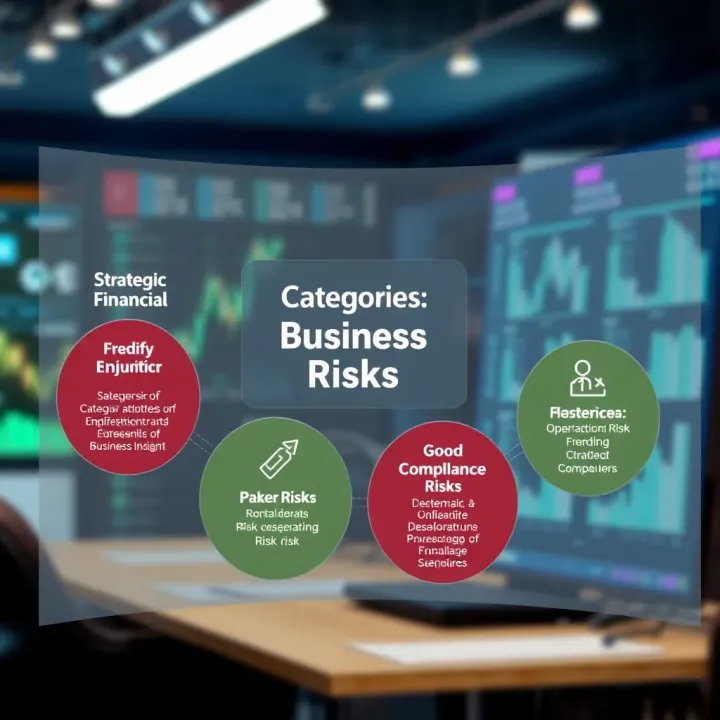
📊 Master risk management in your business presentations! Learn key concepts, risk types, assessment methods & effective communication tailored for Pakistan's market.
📊 Learn effective finance risk management strategies to protect your assets, control financial threats, and ensure business growth within Pakistan’s regulatory framework.

📊 Learn practical risk management in project settings—identify, analyse, and handle risks to keep projects on track in Pakistan's business & development sectors.
Based on 15 reviews