
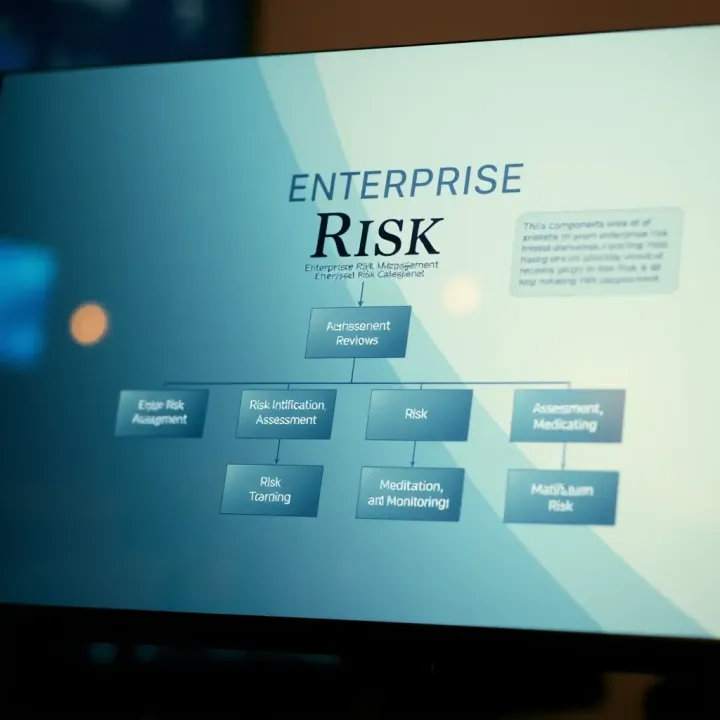
Enterprise Risk Management for Pakistani Businesses
📊 Understand how Enterprise Risk Management helps Pakistani businesses assess and manage risks, learn about tools, leadership roles, regulations, and fostering risk awareness culture.
Edited By
Edward Clarke
Financial risk management is a key part of running any business in Pakistan's unpredictable economic setting. It means spotting potential threats to cash flow and profits, measuring their impact, and taking steps to keep the company stable.
Pakistani businesses face various types of financial risks, including currency fluctuations due to rupee volatility, credit default risks especially with borrowers in uncertain markets, and interest rate risks influenced by the State Bank of Pakistan's (SBP) policy changes. There are also operational risks linked to local issues such as loadshedding that disrupt production, and regulatory risks emerging from changing tax laws enforced by the Federal Board of Revenue (FBR).

Effective risk management starts with identification. A textile mill in Faisalabad, for example, might track raw material price fluctuations in international markets, anticipating potential cost spikes. Similarly, an export-focused company could monitor PKR/USD exchange rates daily to offset currency risks.
After recognising risks, measuring them through tools like Value at Risk (VaR), stress testing, or scenario analyses helps businesses understand potential financial losses. For instance, banks in Pakistan use credit scoring combined with past default data to evaluate loan risks before approving financing.
Once risks are quantified, firms deploy mitigation techniques. Hedging through forward contracts or currency swaps can protect exporters and importers from currency swings. Diversifying investment portfolios among different sectors limits the impact of a downturn in any single industry. Using insurance policies to cover against asset damage during monsoon flooding is another practical approach.
Pakistani businesses must continuously adapt their financial risk management practices to keep pace with economic reforms, market fluctuations, and regulatory updates from institutions like the SBP, FBR, and Securities and Exchange Commission of Pakistan (SECP).
This section sets the foundation by explaining why financial risk management matters in Pakistan and how local businesses approach it. The following parts will expand on specific strategies, tools, and regulatory frameworks shaping effective risk control today.
Grasping financial risks is essential for Pakistani businesses to navigate unpredictable markets and maintain stability. Without a clear understanding of these risks, companies expose themselves to surprises that could hurt profit and reputation. Firms that actively recognise and manage financial risks stand a better chance of surviving economic fluctuations common in Pakistan.
Market risk arises when shifts in economic variables affect business value. In Pakistan, frequent rupee depreciation can erode profits for import-dependent firms. For example, a textile exporter paying raw material suppliers in dollars faces increased costs when the rupee weakens. Similarly, rising interest rates set by the State Bank of Pakistan raise borrowing costs, squeezing cash flows for companies with loans.
Credit risk occurs when customers or partners fail to meet obligations. In local markets, delayed payments or defaults are common challenges. For instance, a distributor selling goods on credit may struggle to recover payments, disrupting working capital. This risk makes it crucial for businesses to assess counterparties carefully and set credit limits accurately.
Liquidity risk involves the inability to meet short-term cash needs. Many Pakistani firms face this during slow sales periods or when customers delay payments. A small retailer, for example, may struggle to pay suppliers or utility bills during Eid holidays despite inventory on hand. Maintaining adequate liquidity reserves can prevent such stressful cash shortages.
Operational risks come from inadequate processes, fraud, or system breakdowns. In Pakistan’s informal sectors, weak controls can lead to theft or accounting errors affecting financial health. Even in formal firms, IT system failures or human mistakes can disrupt operations, causing unexpected expenses or regulatory penalties.
The rupee’s frequent depreciation against the dollar pushes up import costs and inflation, which hits businesses hard. A food processing company paying for imported ingredients may pass higher costs to consumers, but margins shrink if prices rise faster than demand. Inflation also raises salaries and overheads, creating a double burden.
SBP sets monetary policies that directly influence liquidity, interest rates, and foreign exchange controls. Tighter regulations can restrict loan availability or increase borrowing costs. For example, SBP's recent limits on currency forward contracts impact exporters trying to hedge against exchange risk. Compliance with SBP prudential rules remains vital to avoid penalties.
High or unpredictable taxes and duties affect cash flow and pricing decisions. Changes in Federal Board of Revenue (FBR) policies, such as withholding tax adjustments or new customs duties, often disrupt planning. A manufacturer importing machinery must factor in fluctuating customs charges, which can delay project completion or inflate costs.
Regular power outages continue to disrupt production, especially for SMEs lacking generators. A small garment factory facing hours of loadshedding daily risks missing delivery deadlines. These power breaks increase operational costs and could force businesses to limit working hours or invest heavily in backup power, affecting overall profitability.
Understanding the specific types of financial risks and regulatory factors unique to Pakistan equips businesses to better prepare, plan, and protect themselves against economic shocks.
This foundational knowledge sets the stage for practical risk identification and management techniques that follow in the article.

Identifying and measuring financial risk is the first step towards protecting a business from unexpected losses. For Pakistani companies, the complexity of economic factors like rupee fluctuations and regulatory policies makes these methods essential. Without accurate identification and measurement, it’s difficult to plan risk mitigation strategies or allocate resources efficiently.
Financial statement analysis offers a concrete way to spot potential risks early. By scrutinising balance sheets, income statements, and cash flow reports, businesses can detect warning signs such as declining liquidity or rising debt levels. For example, a Karachi textile exporter noticing shrinking cash reserves alongside increasing foreign loans might anticipate difficulty servicing debt during currency depreciation.
Next comes industry benchmarking. This method compares a company’s key financial ratios to those of peers and industry standards. In Pakistan’s competitive sectors like pharmaceuticals or textiles, benchmarking highlights areas where a firm lags, such as profitability margins or accounts receivable turnover. If a Faisalabad-based manufacturer consistently shows longer collection periods compared to others, it flags credit risk tied to customers.
Finally, early warning indicators (EWIs) allow companies to monitor signals that predict future risks, often before they become evident in financial results. For Pakistani businesses, indicators could include delayed payments from government clients, sudden changes in foreign exchange rates, or increasing defaults in related sectors. These signs help firms focus on areas needing urgent attention, like tightening credit policies or hedging currency exposure.
Value at Risk (VaR) models estimate the maximum expected loss over a given period with a certain confidence level. Pakistani banks and investment firms use VaR to understand how much capital they might lose in adverse market conditions, especially when exposed to currency fluctuations or interest rate changes. Though it involves statistical assumptions, VaR helps prioritise risk management efforts by quantifying potential losses.
Stress testing and scenario analysis go beyond models like VaR by simulating extreme but plausible conditions. For instance, a Lahore-based importer might conduct stress tests assuming a sharp PKR devaluation combined with higher customs duty. The test reveals how much cost rises and impact on profitability, informing decisions like renegotiating supplier contracts or adjusting pricing.
Credit scoring systems assess the likelihood of borrower defaults, combining quantitative data and qualitative factors. Pakistani financial institutions frequently use credit scoring when lending to small and medium enterprises (SMEs). By evaluating payment history, financial health, and sector risks, these systems assign scores that guide loan approvals and risk-based pricing.
Accurate identification and measurement of financial risks allow Pakistani businesses to allocate resources smarter and prepare for economic uncertainties realistically.
Together, these methods create a robust foundation enabling firms to make informed, timely decisions in a fluctuating market environment.
Pakistani businesses face a variety of financial risks, from currency swings to interest rate fluctuations. Managing these risks effectively requires the right mix of techniques and instruments. These tools help businesses protect their capital, ensure smooth operations, and maintain profitability even in uncertain conditions. This section explains practical methods available, focusing on derivatives for hedging and other risk mitigation approaches.
Forwards and futures contracts are popular tools for handling currency risk in Pakistan. Suppose an importer in Karachi expects to pay $1 million in three months; currency depreciation could increase costs in rupees. By entering a forward contract with a bank, the importer locks the exchange rate today to eliminate uncertainty. Futures, usually traded on exchanges, serve a similar purpose, offering standardised contracts to buy or sell currency at a future date. These instruments protect against sudden devaluations of the rupee, which have been common in recent years.
Such hedging not only secures budgets but also helps firms plan working capital more confidently. However, these contracts require careful monitoring since adverse market moves can lead to margin calls or liquidity strains. Therefore, firms must balance hedging benefits with associated costs and risks.
Interest rate fluctuations affect loans and debt servicing costs for many Pakistani companies, especially in sectors investing heavily in infrastructure or machinery. Options like interest rate caps or floors offer protection by setting maximum or minimum rates. For example, a manufacturer holding a variable-rate loan can buy an interest rate cap to limit payments if rates rise beyond a threshold.
These options function as insurance, allowing businesses to benefit if rates move favourably while limiting exposure to sharp increases. While not yet widespread in Pakistan, especially outside banking circles, such tools are gaining attention due to rising market volatility and SBP’s policy shifts affecting interest rates.
Relying on a single asset or market segment exposes businesses to concentrated risks. Pakistani investors can lower vulnerability by spreading investments across multiple sectors—such as textiles, agriculture, and technology—or by including foreign assets to reduce rupee-related risks. For instance, a portfolio balanced between PSX-listed equities, real estate, and dollar-denominated bonds tends to absorb shocks better than one concentrated only in local stocks.
Diversification also applies at the operational level. Firms operating in various regions or product lines minimise the impact if disruptions occur in a particular area or market.
Granting credit to customers carries the threat of default, affecting cash flows and profitability. Setting credit risk limits based on customer profiles, payment histories, and industry conditions reduces exposure. Pakistani businesses may cap sales on credit to new or risky clients and require advance payments or guarantees.
Regular credit reviews and a standard approval process ensure limits remain relevant as economic situations change. For banks and financial institutions, credit scoring models supplement manual limits, aiding faster, more objective decision-making.
Liquidity shortages restrict a company’s ability to meet short-term obligations, especially during economic slowdowns or sudden market shocks. Maintaining cash reserves or easily liquidated assets is essential for operational resilience. Many Pakistani businesses set aside funds equivalent to several months of expenses or ensure access to credit lines for emergencies.
This practice also helps weather unpredictable factors like loadshedding or supply chain delays without disrupting payments to suppliers and employees. Properly managed liquidity cushions reduce dependency on costly short-term borrowings and support smoother financial management.
Effective financial risk management in Pakistan hinges on combining derivative hedging with practical measures like diversification, credit limits, and liquidity planning. Together, they build a buffer against uncertainty, allowing businesses to focus on growth and stability.
Financial risk management in Pakistani businesses cannot ignore the twin pillars of regulatory compliance and technology adoption. These elements help companies not only meet legal requirements but also improve their capacity to monitor, report, and mitigate risks effectively. Navigating Federal Board of Revenue (FBR), Securities and Exchange Commission of Pakistan (SECP), and State Bank of Pakistan (SBP) regulations demands thorough reporting standards, supported increasingly by tailored technology tools. This section breaks down these components to help traders, investors, analysts, and students grasp their practical importance.
FBR and SECP reporting requirements govern the transparency and accuracy of financial disclosures. Companies registered with SECP must submit timely financial statements and risk reports, which help avoid penalties and build market trust. For example, SECP mandates disclosures about credit risk exposure and liquidity positions that directly influence investor confidence. Meanwhile, FBR requires businesses to file tax returns reflecting their risk management costs, such as losses due to currency fluctuations or bad debts. Staying compliant with FBR’s tax laws ensures smoother dealings with tax authorities and prevents late payment fines.
Adhering to SBP prudential regulations is essential for financial institutions and other businesses involved in financing or foreign exchange transactions. The SBP outlines strict guidelines on capital adequacy, asset classification, and provisioning against credit risks. Ignoring these can lead to regulatory penalties and reputational damage. Pakistani banks, for instance, are monitored closely for their exposure to currency risk and loan defaults, and they report regularly to SBP to maintain sound financial health. For businesses working with export-import finance, following SBP’s foreign exchange regulations helps avoid unnecessary fines and facilitates smoother cross-border payments.
Modern financial modelling software plays a vital role in predicting and managing risk. In Pakistan, software like SAS, MATLAB, and localised solutions allow businesses to simulate currency volatility, credit defaults, or interest rate changes with real-time data. This kind of technology helps risk managers make informed decisions faster, reducing guesswork. For example, a textile exporter might use a model to forecast the impact of a rupee depreciation against the dollar, adjusting pricing and hedging strategies accordingly.
Risk analytics platforms customised for Pakistani markets are gaining traction. These platforms consider local economic variables such as inflation trends, political risks, and regulatory changes. They provide dashboards and alerts tailored to the unique challenges Pakistan’s economy presents. Companies using them can better anticipate shocks like sudden rupee swings or policy shifts, which helps keep risk exposures within acceptable limits.
Integration with banking and payment systems such as JazzCash and Easypaisa further enhances risk control. Digital payment platforms enable swift tracking of cash flows and transactions, broadening visibility into liquidity management. Businesses can set automated limits and reconciliation alerts, which reduce fraud risk and delays. Moreover, such integration supports smoother execution of risk mitigation instruments like forward contracts or credit limits, directly through digital channels increasingly popular among Pakistani firms.
Effectively combining regulatory compliance with advanced technology tools not only protects businesses from financial losses but also opens doors to more confident investment and growth in Pakistan’s often volatile economic environment.
By embedding these practices, Pakistani businesses can better navigate financial risks while meeting their legal obligations and leveraging real-time data for smarter decisions.
Pakistani businesses face growing uncertainties that demand evolving risk management practices. This section highlights emerging challenges such as economic volatility and political unpredictability, along with rising global expectations for sustainability and governance. Understanding these factors helps companies prepare for risks that traditional models might overlook and guides them towards long-term stability.
Political instability in Pakistan often leads to sudden shifts in government policies, affecting investor confidence and market stability. For instance, frequent changes in leadership or delays in key reforms can trigger sharp rupee depreciation or increased inflation. Traders and investors find it harder to predict market trends, increasing the risk of losses.
Such uncertainty forces businesses to keep reserves ready or hedge against currency risks through financial instruments. Equally, companies may delay investment or expansion plans until more stable conditions emerge. The takeaway is that firms must closely monitor political developments and incorporate them into their financial risk assessments.
Pakistan heavily imports commodities like oil, wheat, and fertilisers. Sudden price swings in global markets directly affect domestic businesses’ costs and profit margins. For example, a sharp rise in petrol prices can increase transportation and production costs, squeezing margins in industries like textiles or manufacturing.
Businesses need to factor commodity price volatility into budgeting and pricing strategies. Having flexible supply chains, locking in prices through futures contracts where possible, and diversifying suppliers can help mitigate such risks. This approach proves vital especially during times of global uncertainty, such as geopolitical conflicts or supply chain disruptions.
Buyers, investors, and regulatory bodies are increasingly demanding responsible business practices. Environmental risks such as water scarcity or pollution can affect operational continuity, while social issues like labour rights impact brand reputation. Poor governance raises concerns about fraud or regulatory breaches.
Pakistani firms recognising these risks adopt ESG (Environmental, Social, and Governance) frameworks to meet stakeholder expectations. This improves access to international markets and foreign investment, which now often require ESG compliance. Ignoring these factors can lead to missed opportunities or heightened scrutiny.
Leading companies in Pakistan are integrating international ESG standards such as GRI (Global Reporting Initiative) or SASB (Sustainability Accounting Standards Board) into their reporting. This adaptation involves transparent disclosure of sustainability efforts, cleaner production methods, and stronger internal controls.
For example, several textile exporters have adopted cleaner technologies and fair labour practices to meet buyers’ requirements in Europe and the US. Such moves enhance credibility, reduce compliance risks, and open doors to premium markets. Smaller firms are also beginning to follow suit, often supported by government incentives or donor programmes.
Forward-looking financial risk management in Pakistan must balance economic realities with global trends. Staying alert to political shifts, commodity fluctuations, and sustainability demands will help businesses manage risks more effectively now and in the future.
Regularly monitor political developments and adjust risk strategies accordingly.
Use commodity price hedging tools and diversify supply sources.
Incorporate ESG assessments into risk management frameworks.
Align reporting with international standards to attract investment.
These steps will prepare Pakistani businesses to navigate uncertain times while building resilience and reputation.
📊 Understand how Enterprise Risk Management helps Pakistani businesses assess and manage risks, learn about tools, leadership roles, regulations, and fostering risk awareness culture.
🔍 Learn practical risk management strategies for Pakistani businesses. Identify, assess, and tackle economic and operational risks effectively with tech and compliance insights.

📊 Learn practical risk management in project settings—identify, analyse, and handle risks to keep projects on track in Pakistan's business & development sectors.

Discover how effective risk management identifies hazards ⚠️, cuts losses 💰, boosts decisions ✅, ensures compliance 📋, and protects your business reputation 📈 in Pakistan.
Based on 9 reviews