
Understanding Forex Trading Simulators in Pakistan
Explore how forex trading simulators give Pakistani traders a chance to sharpen skills and trade confidently without risking PKR. Learn top tools & tips 📈💹
Edited By
Charlotte Evans
Forex trading is the exchange of one currency for another at an agreed price, done in real time on global markets. Pakistani traders access this 24-hour market primarily through online platforms that connect banks, brokers, and individual investors worldwide.
Live forex trading means making transactions as currency prices move, not based on past data or delayed charts. This immediacy lets you react quickly to market shifts caused by economic announcements, geopolitical events, or central bank decisions. For example, when the State Bank of Pakistan (SBP) adjusts interest rates, it impacts the PKR currency value, and live traders can capitalise on these changes immediately.
Currency Pairs: In forex, currencies are always quoted in pairs, such as USD/PKR or EUR/USD. Your profit depends on whether the base currency strengthens or weakens against the quote currency.
Trading Platforms: Popular platforms like MetaTrader 4/5, cTrader, or broker-specific software allow live access to market prices and execution of trades instantly.
Leverage: Brokers often offer leverage, meaning you can control a larger position with a smaller capital amount. This amplifies both profits and losses, so careful risk management matters.
Trading live helps you see real-time price movements and test strategies without delay. Since PKR rates can fluctuate sharply due to imports, exports, and political factors, having this is especially useful.
Pakistani traders should choose brokers regulated by local or international authorities to avoid scams and ensure smooth transactions.
Payment methods like JazzCash and Easypaisa now facilitate easier fund transfers to brokers.
Familiarity with FBR’s tax implications on forex earnings is necessary for compliance.
Being aware of weekdays and hours with the highest forex liquidity (like during London and New York overlapping sessions) improves trade timing.
Understanding these basics sets the ground for effectively navigating live forex trading as a Pakistani trader, helping you make informed decisions and manage risks well.
Live forex trading is where the actual buying and selling of currencies happens in real-time on the global market. It matters a lot for traders because this is the stage where theory meets practice — the prices shift every second based on real-world events, economic news, and market sentiment. For Pakistani traders, this section introduces how live trading works so that you can make informed decisions instead of relying solely on predictions or simulations.
Understanding live forex trading helps you get a grip on how fast markets move and what factors influence price changes. Unlike paper trading or demo accounts, live trading involves real money and real risk; hence, knowing the basics here saves you from costly mistakes.
In live forex trading, prices of currency pairs update instantly to reflect the latest supply and demand. For example, when Pakistan announces new economic policies, the Pakistani rupee (PKR) might fluctuate against the US dollar (USD) within minutes or even seconds. Traders watch these shifts closely to decide when to enter or exit trades.
A practical point is that these movements can be tiny or substantial depending on market conditions. Day traders or scalpers, for instance, make multiple trades exploiting small price changes during the day. The key is reacting to these real-time price movements quickly, which demo accounts usually cannot replicate accurately.
Demo trading provides a risk-free environment to practice strategies using virtual money without market pressures. However, it lacks genuine emotional factors like fear or greed which significantly impact decision-making in live trading.
Moreover, demo accounts often have ideal execution with no delays or slippage, while live trading faces real conditions where orders might fill slower or at different prices than expected. For Pakistani traders, moving from demo to live trading involves adjusting to these realities — handling emotional stress, managing real funds, and coping with fast-changing situations.
The forex market mostly deals in a handful of major currency pairs, such as USD/PKR, EUR/USD, GBP/USD, USD/JPY, and USD/CNY. These pairs attract the most trading volume and usually have tighter spreads, which means lower costs for traders. Pakistani traders often keep an eye on USD/PKR due to its relevance in local business and remittances.
Focusing on major pairs simplifies trading as these currencies tend to show more predictable movements and higher liquidity, making it easier to enter and exit trades smoothly.
The forex market never sleeps—it operates 24 hours from Sunday evening to Friday evening PKT, covering four major sessions: Sydney, Tokyo, London, and New York. Each session brings different volatility and trading opportunities.
Participants include banks, financial institutions, hedge funds, corporations, governments, and individual traders like you. For Pakistani traders, the London and New York sessions overlap with local business hours partially, offering ample opportunities to trade during active market times.
Remember, knowing market hours lets you pick the best times to trade. For example, liquidity and price moves spike during London/New York overlap, which is often the busiest trading time globally.
Understanding these fundamentals prepares you for the fast-paced environment of live forex trading and helps you navigate the market wisely.
Trading platforms and tools form the backbone of live forex trading. These digital environments let traders access the market, execute trades, and analyse price movements in real time—without them, navigating the forex market would be like sailing without a compass. For Pakistani traders, choosing the right platform and mastering the available tools is key to making timely, effective decisions.
MetaTrader 4 and 5 are by far the most widely used forex platforms in Pakistan. MetaTrader 4 (MT4) offers a straightforward interface with essential features like charting, technical indicators, and automated trading via Expert Advisors (EAs). Many local brokers provide MT4 because it suits both beginners and experienced traders who want reliable execution and a user-friendly experience.
MetaTrader 5 (MT5) is the newer, upgraded version with additional timeframes, an improved economic calendar, and support for more asset types beyond forex, such as stocks and commodities. Pakistani traders who want a one-stop platform for multi-asset trading often opt for MT5. Both platforms allow custom scripting to automate strategies, a crucial feature in the fast-moving forex market.
cTrader and other alternatives are gaining popularity as traders look for more customisation and transparency. cTrader offers advanced charting tools and level II pricing (depth of market), which helps traders understand volume at different price points—useful for those applying scalping or high-frequency strategies.
Beyond cTrader, platforms such as TradingView provide powerful charting combined with social features where traders share ideas and analyses. While not a trading platform in itself, TradingView links with several Pakistani brokers and offers a competitive edge for technical analysis.
Live price feeds are essential because delays can cost money in forex trading where prices can shift by a few pips within seconds. Pakistani traders rely on platforms that offer fast and reliable live streams, reducing lag and slippage risks. Local brokers integrated with MetaTrader or cTrader typically source data from global liquidity providers ensuring an accurate reflection of market conditions.
Technical analysis tools like moving averages, RSI, Fibonacci retracements, and MACD enable traders to spot trends, support, and resistance levels. These tools help make sense of live price movements rather than guessing. Platforms usually provide these indicators out of the box, but Pakistani traders can also add custom indicators or scripts tailored to specific trading strategies.
Mobile apps have transformed forex trading accessibility in Pakistan. Apps from MetaTrader and cTrader allow traders to monitor and execute trades on the go. This is particularly helpful for those in smaller cities or travelling, where desktop access is limited.
However, mobile forex trading demands reliable internet. Pakistan's varied internet quality means occasional outages or slow connections can disrupt trades. Traders need stable 3G/4G or broadband and may consider backup internet solutions to stay connected during market hours.
Choosing the right platform and using reliable, real-time tools equips Pakistani forex traders to react quickly, analyse thoroughly, and trade confidently in live markets.
Understanding common trading strategies is essential for anyone entering the live forex market. Strategies guide your trading decisions, help manage risk, and improve chances of success. For Pakistani traders, knowing which strategy suits your lifestyle and risk appetite is crucial given the market's fast pace and volatility.
Scalping involves making numerous trades within minutes or seconds to grab tiny profits from small price changes. Traders focus on pairs like USD/PKR or EUR/USD, expecting small but frequent gains. Because fluctuations in these pairs can be subtle throughout the day, scalping requires quick execution and sharp attention.
In practical terms, a scalper might open a buy position at 1.3550 and close it shortly after at 1.3553, making a small profit but repeating this multiple times a day. This method suits those who can monitor screens continuously and react swiftly to price ticks. However, transaction costs and spreads must be low to keep profits intact.
Scalping and day trading demand strict time discipline. Traders usually operate during the busiest hours when spreads are tightest—such as London and New York sessions overlapping. Managing your time well means you avoid trading in low liquidity hours when spreads widen and slippage increases.
For Pakistani traders, this might mean trading during night-time hours due to market overlaps or when internet and electricity conditions are stable to avoid sudden disconnects. Planning breaks, setting alarms, and keeping orders ready can help manage the hectic pace of scalping.
Swing trading involves holding positions for several days, aiming to catch price "swings" caused by market sentiment and news. Position trading stretches this further, holding trades for weeks or even months based on fundamental or technical trends.
For instance, a swing trader might buy USD/PKR anticipating a rise due to political developments and hold for a few days to cash in on the move. Position traders might invest based on SBP monetary policy announcements affecting currency value, holding until market prices reflect those fundamentals.
This approach offers more flexibility for those who can't watch charts all day and suits Pakistan’s timezone, allowing traders to analyse market moves during their daytime hours.
Longer holding periods carry different risk profiles. Swing and position traders face overnight risks like gaps or sudden news events that can affect prices dramatically. However, they often set wider stop losses, giving trades room to breathe compared to scalping.
The potential reward is also higher, as price moves are larger over days or weeks. Still, careful risk management—like limiting invested capital per trade or using stop-loss orders—is vital to protect against unexpected market shifts, especially during volatile global economic events.
Leverage lets traders control larger positions with a smaller amount of capital, amplifying profits and losses. For example, with 1:100 leverage, Rs 10,000 can control Rs 1,000,000 worth of currency. This increases buying power but also risk.
Pakistani traders often access leverage through local or international brokers. While attractive, leverage must be used wisely because large positions can lead to significant losses, even wiping out your account quickly if the market moves against you.
Proper risk management with leverage means not risking more than a small percentage of your trading capital on a single trade—commonly 1-2%. Using stop-loss orders automatically closes losing trades at predetermined levels, limiting damage.
Moreover, avoiding the temptation to use maximum leverage helps preserve your balance during volatile market hours. Many Pakistani traders find that moderate leverage combined with strong discipline works better over the long run than chasing quick profits with high stakes.
Successful live forex trading depends not just on picking the right strategy, but also sticking to it with strong time management and careful risk control. Each approach suits different personalities and lifestyles, so choose wisely based on your goals and market understanding.
Navigating live forex trading is no cakewalk, especially for traders in Pakistan. Understanding the risks and challenges is vital for protecting your capital and making informed decisions. This section highlights key concerns, from market volatility to regulation, offering practical insight that helps you trade smarter and safer.
Impact on trade outcomes: Forex markets are known for sudden price swings, which can turn profits into losses quickly. For example, a trader holding a position on USD/PKR might see sharp changes due to sudden news or shifts in market sentiment. Such volatility means you must keep a close eye on live prices and use tools like stop-loss orders to limit potential damage.
Volatility also affects liquidity, so your trade might not execute at the intended price. This can be especially challenging during off-peak hours in Pakistan’s time zone. Being prepared for these rapid moves is necessary to avoid surprises and unnecessary losses.
Volatility during global economic events: Major economic announcements, such as US Federal Reserve decisions or crude oil price shifts, often trigger spikes in volatility. For Pakistani traders, the ripple effects can be felt strongly on currency pairs like USD/PKR and EUR/USD.
For example, geopolitical tensions or unexpected economic data can cause the rupee to swing against the dollar, impacting open trades. Staying updated on global news and economic calendars helps anticipate such events and adjust your strategy or reduce exposure accordingly.
Emotional control: Forex trading live requires a calm, steady mind. Sudden gains or losses can prompt overreaction, leading to poor choices. Losing your cool might mean sticking to a trade too long or pulling out too early, both hurting profits.
Pakistani traders often feel pressure due to tight budgets and family responsibilities, making emotional discipline tougher but more important. Using a trading journal to record thoughts and sticking to a predetermined plan helps maintain control.
Avoiding impulsive decisions: Impulse trading, driven by fear or greed, can wipe out an account fast. For instance, chasing losses by doubling down on a losing trade rarely works out.
Developing a routine, setting realistic goals, and using automated orders (like stop-loss and take-profit) can prevent rash moves. Remember, patience is a trader’s best friend, especially when volatile markets tempt you to act hastily.
Legal status of forex trading: In Pakistan, forex trading is legal but highly regulated. The State Bank of Pakistan (SBP) permits online trading with approved brokers; however, unregulated offshore brokers operating illegally pose risks.
Traders must confirm the legality of their brokers and avoid platforms that lack proper authorisation. Failing to do so may lead to blocked accounts or financial losses without legal recourse.
Selecting regulated brokers: Choosing a broker registered with Pakistan’s Securities and Exchange Commission (SECP) or authorised by SBP safeguards your investments. Regulated brokers adhere to strict rules on transparency, fund security, and fair pricing.
Beware of brokers promising unrealistic returns or requiring huge upfront deposits. Always verify credentials on official regulatory websites and seek user reviews to avoid scams. A legitimate broker enables easier deposit and withdrawal via local methods like JazzCash or Easypaisa.
In live forex trading, understanding risks—from market swings and emotional traps to legal safeguards—is essential for Pakistani traders to protect their capital and trade confidently.
Navigating live forex trading as a Pakistani trader demands not only knowledge of the markets but also a clear understanding of local practicalities. From managing account funding to handling tax filings and steering clear of scams, each step carries its own importance. These tips are grounded in the Pakistani financial environment, aiming to help traders avoid common pitfalls and make their forex journey smoother.
Using JazzCash, Easypaisa, and bank transfers provides convenient ways for Pakistani traders to fund their forex accounts without unnecessary delays. Many brokers now accept deposits via popular mobile wallets like JazzCash and Easypaisa, which are widely used across the country. For instance, you can transfer funds through these wallets or direct bank transfers from accounts with major banks like HBL or MCB. This allows quick remittance of capital, making it easier to manage live trading positions.
Currency conversion and charges are key considerations when funding your account. Since most forex brokers operate in US dollars or other foreign currencies, funds in Pakistani Rupees (PKR) need conversion. This process often comes with a cost—whether it’s a spread, commission, or exchange rate markup by your bank or payment service. For example, if you fund Rs 100,000, your effective dollar amount might be slightly less due to conversion fees. Understanding these costs helps you plan your trades better and avoid surprises during withdrawals.
Filing profits with Federal Board of Revenue (FBR) is a necessary step for Pakistani forex traders to stay compliant with local laws. Though forex trading profits can be considered part of capital gains or business income, the rules may differ case by case. Traders should report gains accurately while filing annual tax returns to avoid fines or legal troubles. For example, consulting a tax advisor familiar with FBR regulations can clarify the exact obligations according to your trading volume and frequency.
Keeping records for compliance ensures you have proper documentation for all trades, deposits, and withdrawals. Detailed logs help during tax audits or inquiries, showing transparency. Keeping digital copies of transaction receipts from platforms like JazzCash or bank statements showing transfers to and from your broker account can be crucial. This practice not only helps with tax filing but also provides a clear audit trail for your personal reference.
Red flags to watch for include brokers promising guaranteed profits, unreasonably high leverage beyond regulatory limits, or unclear withdrawal policies. For example, if a broker pressures you to deposit large sums quickly or refuses to let you withdraw funds without explanation, this is a serious warning. Pakistani traders should remain cautious when unsolicited offers come through social media or messaging apps, as these are common platforms for scams.
Verifying broker credentials means confirming a forex broker’s regulation status before opening an account. Pakistani traders should look for brokers licensed by internationally recognised authorities like the UK’s FCA or Australian ASIC, or those registered with the Securities and Exchange Commission of Pakistan (SECP). Checking reviews and broker reputation on trusted Pakistani trading forums can also prevent costly mistakes. Proper due diligence protects you from losing your investment to illegitimate operators.
Staying mindful about funding methods, taxation, and broker selection makes a genuine difference in live forex trading success especially for Pakistani traders. Simple precautions and awareness help avoid unnecessary trouble and enable you to focus on trading effectively.
Explore how forex trading simulators give Pakistani traders a chance to sharpen skills and trade confidently without risking PKR. Learn top tools & tips 📈💹
Learn forex trading in Pakistan 🇵🇰 with a practical guide on market basics, reliable platforms, risk management, key strategies, and tips for successful trading 📈
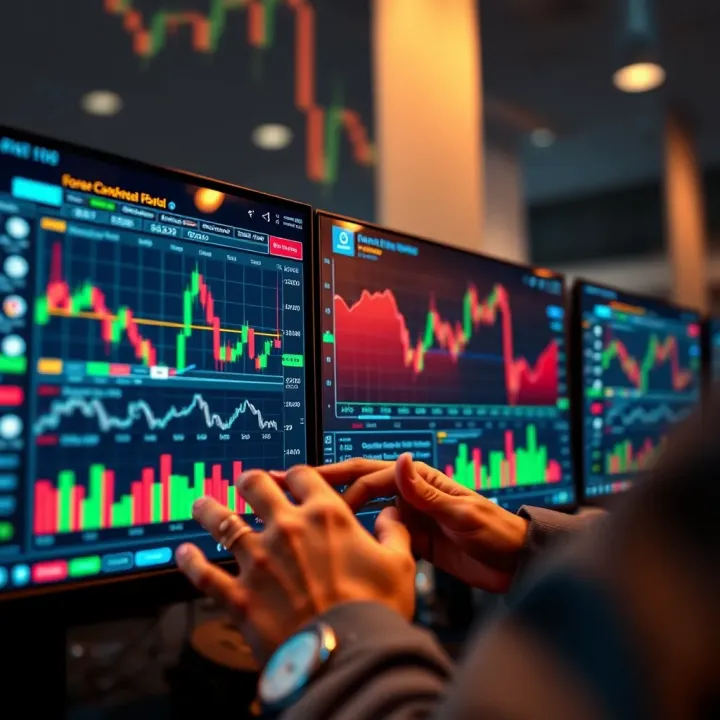
Find the best forex trading platform for Pakistani traders 🇵🇰. Explore key features, security, costs, and support to match your trading style with ease 💹.
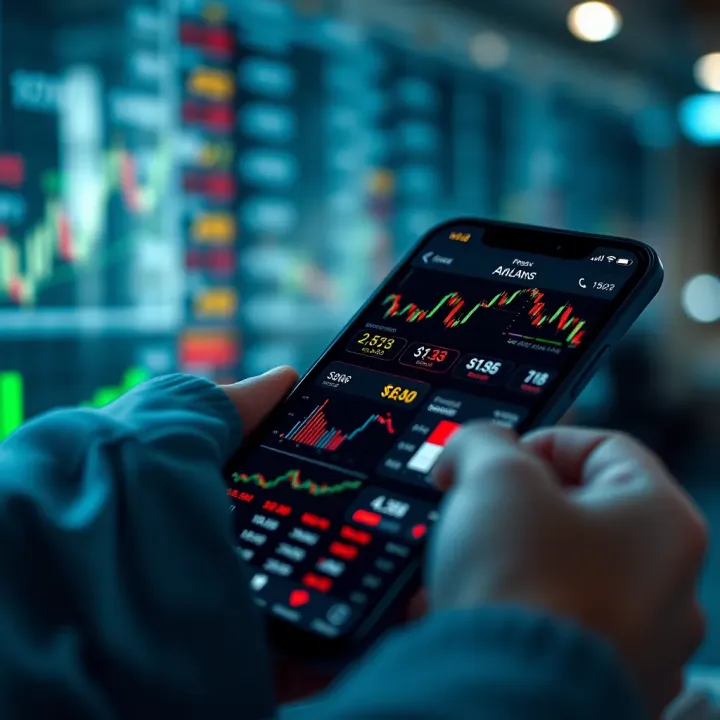
📱 Find the best forex trading app in Pakistan with our guide! Learn about top apps, key features, regulations, and safe trading tips to boost your skills. 🇵🇰
Based on 8 reviews