

Guide to Powerful Candlestick Patterns with Free PDF
📈 Master key candlestick patterns with our guide! Learn to spot and read 35 essential shapes to boost your trading skills. Free PDF included! 📊
Edited By
Isabella Turner
Chart patterns form the backbone of technical analysis, helping traders and investors predict market movements by observing price behaviours on charts. For many in Pakistan's investment community, understanding these patterns is not only useful but essential for making informed decisions, whether dealing in stocks listed on the Pakistan Stock Exchange (PSX) or speculating on commodities.
Several types of chart patterns exist, each presenting clues about potential price direction. These include reversal patterns such as Head and Shoulders, which signal trend changes, and continuation patterns like Flags and Pennants that suggest a trend may persist. Recognising these patterns allows market participants to time entries and exits more thoughtfully.

Access to reliable educational resources can be challenging. Free PDF guides serve as practical tools by consolidating these patterns and explanations in one place, enabling learners to study at their own pace. Trusted PDFs usually contain clear illustrations, concise explanations, real-world examples, and tips tailored for local markets.
Using chart pattern PDFs effectively involves regular practice. For instance, applying the Cup and Handle pattern on historical PSX data helps traders visualise how market sentiment shifts before a breakout.
When searching for free PDFs, prioritise sources associated with established financial publications, reputable trading platforms, or professional educators known within Pakistan's trading circles. Avoid generic downloads that might lack accuracy or be outdated.
To sum up, understanding chart patterns via accessible PDF resources improves your technical analysis skills. It brings clarity to market trends, supports better trading strategies, and helps navigate Pakistan’s financial markets with greater confidence. Keep referring back to these guides as you monitor live charts, and over time, spotting profitable setups will become more instinctive.
Readers diving into technical analysis will find chart patterns to be essential tools in understanding market behaviour. These patterns visually represent the price movements of stocks, commodities, or currencies over time, helping traders and investors make informed decisions. Recognising these patterns early allows one to anticipate potential shifts in market trends, which can be especially useful in volatile environments like the Pakistan Stock Exchange (PSX).
Chart patterns are specific formations created by price movements on a chart, reflecting the psychology of market participants. They act as a kind of roadmap, signalling possible future movements based on historical price behaviour. In technical analysis, these patterns form the backbone of prediction methods, supplementing indicators like moving averages or RSI (Relative Strength Index).
Traders watch for reliable chart patterns such as head and shoulders, triangles, or flags to forecast whether a security's price will continue in the current direction or reverse. For instance, spotting a "double top" signals a potential bearish reversal, prompting traders to consider selling or short-selling. Conversely, a "bullish pennant" might indicate a continuation of an uptrend, signalling a buying opportunity.
Although chart patterns are universal, their application in Pakistani markets requires context. The PSX and commodities markets here sometimes display higher volatility due to political events, economic announcements, or external shocks like global commodity price changes. Understanding typical patterns helps local traders navigate this environment better. Learning to read these signals can improve entry and exit timing, which is crucial given the market’s occasional unpredictability.
One major hurdle for beginners is accurately recognising patterns amid noisy data. Price fluctuations create many illusionary shapes that seem like meaningful patterns but don’t hold predictive value. For example, mistaking a short-term price spike as a breakout can result in premature trades with losses. Practice and repeated exposure to charts from different sectors help build the skill to identify valid patterns reliably.
False signals, or "fakeouts", often appear when a price briefly breaks a pattern boundary only to reverse quickly. In Pakistan’s markets, which can react suddenly to news or rumours, these fakeouts happen more often. Traders must confirm patterns with volume trends or additional indicators to avoid being misled by such false moves.
Due to the difficulty in interpretation, having trustworthy and clear learning materials is necessary. Many free PDFs claiming to teach chart patterns online can be outdated or poorly explained. Accessing credible resources, preferably from established Pakistani trading educators or verified international sources, ensures that learners get accurate, up-to-date knowledge. Combining PDFs with practical charting software and real-world examples from the PSX sharpens understanding.
Recognising valid chart patterns reliably turns guesswork into informed decisions; this skill grows by combining quality learning resources with practical chart analysis.
By starting with a clear grasp of what chart patterns represent and facing the common challenges head-on, traders in Pakistan can gradually build confidence in their technical analysis skills. This foundation sets the stage for deeper exploration of specific patterns and their uses in market strategies.

When starting with chart patterns, having reliable PDF resources at hand can make a big difference. PDFs act as handy references you can consult anytime to brush up on technical analysis basics or complex patterns. But not all free resources carry the same weight — knowing where to find trustworthy PDFs and how to assess their quality protects you from wasting time or picking up wrong ideas.
Trusted websites offering free downloads usually host materials prepared by experienced market analysts or reputable financial educators. For example, popular international sites like Investopedia or TradingView occasionally provide free downloadable guides. Such sources ensure the information is standard and generally unbiased.
Having said that, relying solely on international sites may miss the nuances of Pakistan’s market dynamics. That’s where educational platforms and broker resources come in handy. Many Pakistani brokers and financial education platforms offer free PDFs tailored specifically for local traders. These might include examples from the Pakistan Stock Exchange (PSX) or address local trading conditions, making them more practical. For instance, brokerage firms like IGI Securities or MCB-Arif Habib Savings commonly provide technical analysis resources to their clients.
Moreover, Pakistan-specific financial education portals play a crucial role by delivering content designed for the local investor community. Sites such as PSX official education pages or resources from the Pakistan Institute of Development Economics sometimes share free PDFs explaining chart patterns with regional case studies. These portals consider local market trends, regulatory environment, and investor behaviour, helping users connect theory with real trading scenarios.
Before relying on a PDF, checking author credibility is vital. Look for materials penned by recognised analysts or entities known in Pakistan’s financial circles. Authors should ideally have a background in finance, trading, or a related discipline, preferably with local market experience. PDFs from unknown or unverified authors may contain errors or misleading interpretations that can cost you in actual trading.
Another significant factor is verifying up-to-date content. The financial markets evolve constantly, and technical analysis methods can change in emphasis or application. PDFs published several years ago might not reflect current market behaviour or technological advancements in charting tools. Make sure the resource dates from the last two to three years to keep your learning relevant.
Lastly, avoid outdated or misleading materials by cross-checking key facts with multiple sources. For instance, a PDF might show past examples of PSX patterns, but if it ignores recent regulatory changes or market reforms, its advice might not hold. Also, steer clear of overly simplistic guides promising guaranteed profits from chart patterns — trading always carries risk and needs cautious analysis.
Accessing free chart pattern PDFs from credible, updated sources, especially those offering Pakistan-relevant examples, equips traders with practical knowledge and confidence to navigate market charts effectively.
Overall, choosing the right PDFs is not just about free downloads but about ensuring quality, accuracy, and local relevance to turn technical concepts into actionable market insight.
Understanding key chart patterns is essential for traders and investors aiming to make informed decisions in the Pakistani market and beyond. These patterns offer visual cues that help anticipate future price moves by interpreting market psychology. Familiarity with them boosts your ability to spot entry and exit points, manage risk, and improve overall trading strategy.
Flags and pennants are short-term continuation patterns that appear after a strong price move, signaling the market is taking a breather before continuing its trend. Flags look like small rectangles slanting against the prevailing trend, while pennants form small symmetrical triangles. For example, on the Pakistan Stock Exchange (PSX), a strong upward rally in a stock like Engro Fertilizers might pause briefly showing a flag pattern before pushing higher, signalling traders to hold or add positions.
Ascending and descending triangles highlight buying or selling pressure during trends. An ascending triangle has a flat upper resistance line and rising support, indicating bullish momentum likely to break upward. Conversely, a descending triangle has a flat support line and lowering resistance, hinting at bearish continuation. Traders in Pakistan often watch these during volatile sessions, as breakouts can offer good momentum trades.
The head and shoulders pattern signals a looming trend reversal from bullish to bearish (or vice versa, in its inverse form). It forms three peaks with the middle one (head) higher than the shoulders. A clear neckline break confirms the reversal. For instance, when PSX experienced a peak in late 2023, some blue-chip stocks showed head and shoulders patterns before declining, helping traders exit before losses mounted.
Double tops and bottoms are straightforward reversal indicators where price hits a high or low twice at roughly the same level. A double top signals a potential fall, while a double bottom hints at a rise. These patterns help traders confirm exhaustion in current trends, like watching a textile stock on PSX hitting repeated highs before turning down.
Rounding bottoms or saucer patterns illustrate gradual trend shifts from bearish to bullish phases. They unfold slowly, reflecting a buyer accumulation phase. Pakistani investors may notice this in sectors recovering from market slowdowns, such as the cement industry, where prices slowly crawl out of a dip, signalling buying opportunities.
Rectangles and ranges form when price moves sideways within support and resistance levels, indicating market indecision. This consolidation period gives traders time to prepare for a breakout in either direction. In Pakistan, stocks often enter such ranges after earnings announcements or news, where volume may decline before the next move.
Symmetrical triangles show contracting price action with converging trendlines. They represent balance between buyers and sellers, with breakout direction unclear until it happens. Traders keep a close eye on volume spikes for confirmation. Such patterns are common in PSX stocks during uncertain economic situations, where the market waits for new triggers.
Mastering these key chart patterns helps you read market sentiment and price action more accurately. Using reliable chart pattern PDFs alongside real market examples will deepen your understanding and support smarter trading choices.
Chart pattern PDFs provide a solid foundation for understanding technical analysis, but their real value comes from practical application. To benefit fully, you should integrate these PDFs with live market data and analysis tools. This section discusses how to use chart pattern PDFs effectively, especially in the context of Pakistan’s financial markets.
Using chart pattern PDFs alongside real-time examples from the Pakistan Stock Exchange (PSX) can bridge theory and practice. When you observe a pattern like a head and shoulders or a flag forming in PSX-listed stocks such as Engro Corporation or Lucky Cement, compare it with the visuals and descriptions in your PDF guides. This hands-on approach helps solidify your understanding and hones your ability to spot these patterns in live charts.
For instance, during phases of market volatility, you might notice an ascending triangle developing in a top-performing stock. Referring to the PDF can help confirm whether the pattern fits the textbook definition and predict possible breakouts. Such real-time analysis builds confidence and keeps you updated with current market behaviour.
PDFs alone cannot provide dynamic analysis. Pair them with charting software like TradingView, MetaTrader, or local brokerage platforms that offer real-time price charts and technical indicators. These tools let you overlay patterns identified from PDFs directly onto live charts, offering a clearer picture of evolving market trends.
For example, you may mark a rectangle consolidation or symmetrical triangle on the software and monitor how price behaves around support and resistance levels. Some platforms even allow alert settings when prices break pattern boundaries. Using such features together with PDF guidelines enhances accuracy and provides timely trading signals.
One common mistake is trusting chart patterns blindly without cross-verifying with other technical indicators. Patterns suggest possible price directions but can give false signals if taken alone. Confirm your analysis with volume changes, moving averages, or RSI (Relative Strength Index) before making decisions. For example, a breakout from a pennant pattern should ideally be accompanied by higher volume to validate the move.
Ignoring confirmation risks losses, especially in Pakistan’s occasionally volatile markets. So, balance pattern reading with other tools to avoid acting on misleading signals.
Not all chart patterns behave identically across markets, and Pakistani markets have their unique trends and limitations. For instance, smaller liquidity or market interventions can distort traditional patterns. Therefore, it’s essential to adapt the PDF concepts to local context by observing past historical patterns on PSX or KSE-100 index data.
Local events like policy announcements, political developments, or international economic factors often cause sharp price jumps that don’t conform to usual patterns. Be flexible in applying learned material and combine pattern analysis with fundamental context to make better-informed decisions.
Effective use of chart pattern PDFs requires mixing textbook knowledge with real market experience, verification through multiple tools, and considering the unique features of Pakistani markets.
By following these steps, you will bring chart pattern study from passive reading to active trading insight, improving both understanding and results.
Accessing chart patterns through PDFs is just the first step. To truly sharpen your technical analysis skills, supplementing these guides with diverse learning resources and community interaction proves very useful. These additional materials offer practical insights and update your knowledge with current trends, especially in the context of Pakistan's dynamic markets.
YouTube offers many channels dedicated to technical analysis that can complement your chart pattern PDFs. Channels such as 'Trading Academy Pakistan' or 'Technical Analysis with Faisal' break down concepts like pattern recognition and trend analysis using live market examples. These visual explanations help you grasp ideas faster and see how patterns behave in real-time on Pakistan Stock Exchange (PSX) charts. Also, many creators provide series on common pitfalls, which PDFs might not cover thoroughly.
Besides free video content, several online courses cater specifically to Pakistani traders looking to deepen their understanding. Platforms like Udemy and Coursera offer paid courses on technical analysis with certificates, while some local providers run weekend workshops and webinars focusing on PSX trading strategies. These structured courses usually include exercises, quizzes, and personal feedback, which you won't get from PDFs alone. Taking such courses can give you practical knowledge and confidence to apply chart patterns effectively.
Local forums and social media groups play a vital role in learning beyond static resources. Communities on Facebook, Telegram, or groups like Pakistan Stocks Traders Forum provide a space where members share chart screenshots, discuss market news, and post video analyses. These platforms often spotlight issues specific to Pakistani market conditions, such as impact of political events or currency fluctuations, which might not be covered in general PDFs.
Live discussions and peer reviews help sharpen your analysis skills. When you post your own charts for feedback, you gain new perspectives and can identify mistakes early. Similarly, observing how others interpret patterns and adjust their positions offers practical, real-time learning. This interaction also builds confidence, helping you move from theory to actual trading. Regular engagement with peers makes your chart pattern knowledge more precise and contextually relevant to Pakistan’s markets.
Pairing chart pattern PDFs with online learning and community support offers a balanced approach — boosting your understanding and practical application in Pakistan’s evolving stock market.
📈 Master key candlestick patterns with our guide! Learn to spot and read 35 essential shapes to boost your trading skills. Free PDF included! 📊
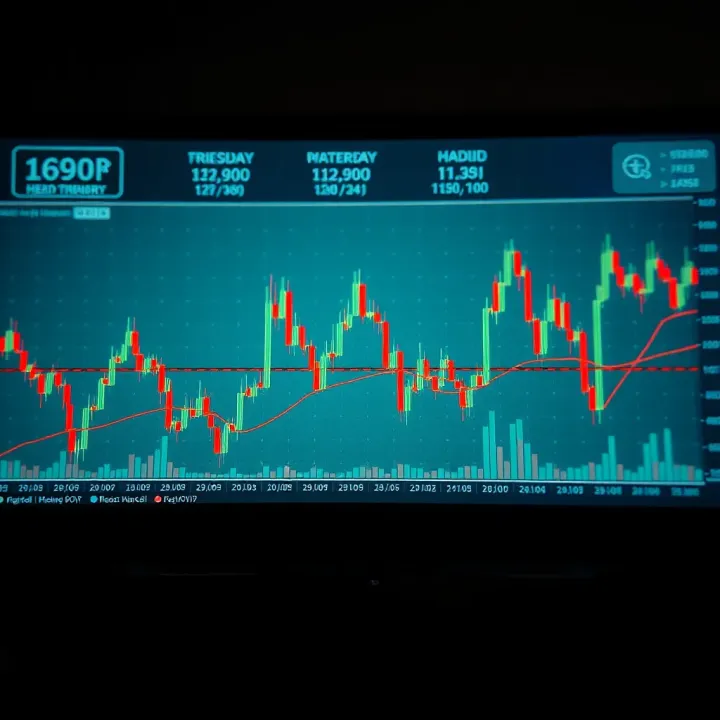
📊 Learn key chart patterns & boost your trading skills with easy-to-understand PDF resources. Get insights on pattern uses & reliable guides to master them.

📊 Learn to spot seven essential chart patterns in trading, understand their features, and apply practical tips for better decisions with smart risk management.

📈 Master candlestick patterns with this detailed guide! Learn bullish, bearish, and neutral signals to boost your trading skills in Pakistan's market. 🇵🇰
Based on 14 reviews