

Understanding Binary Subtraction Basics
🔢 Learn how binary subtraction works with clear examples and practical tips. Understand borrowing and two's complement methods used in electronics and computing.
Edited By
Jack Reynolds
Inorder traversal is one of the fundamental methods to visit nodes in a binary tree. This traversal follows a simple left-root-right pattern, meaning that for each node, you first visit its left child, then the node itself, and finally its right child. Understanding this method is key for many applications in computer science, especially in areas like data sorting and expression evaluation.
Unlike other tree traversal techniques such as preorder or postorder, inorder traversal produces nodes in ascending order when applied to binary search trees (BSTs). This property is particularly useful in tasks requiring sorted output without explicitly using sorting algorithms.
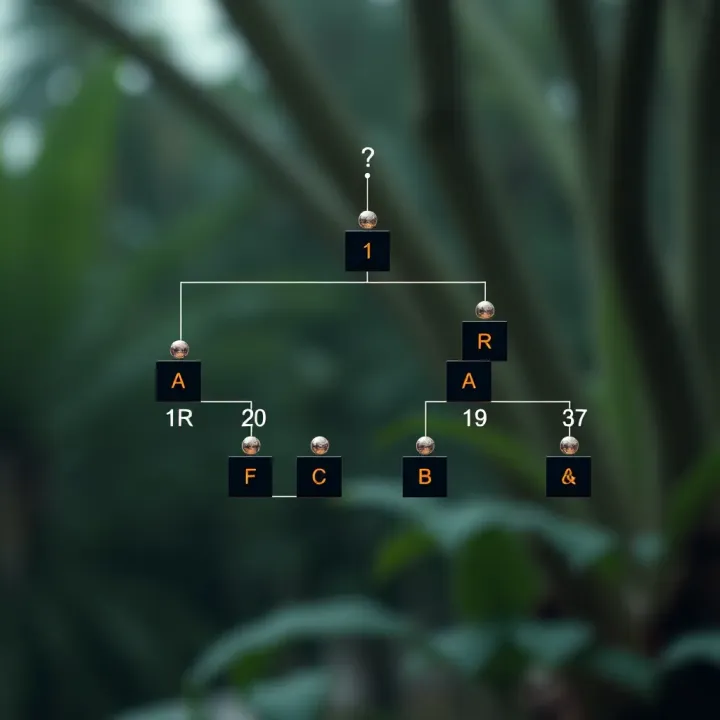
The process of inorder traversal can be implemented either recursively or iteratively. Recursive implementations leverage function call stacks, making the code straightforward but sometimes prone to stack overflow on very deep trees. Iterative methods use explicit stacks to handle node visits and are preferred in memory-constrained environments or when efficiency matters.
Inorder traversal shines in problems where maintaining the inherent sorted structure of data is important, so traders and analysts working with ordered datasets often benefit from algorithms relying on this technique.
Some practical uses of inorder traversal include:
Extracting elements from BSTs in sorted order
Evaluating infix expressions represented in binary trees
Generating a sorted list from hierarchical data without extra sorting
For programmers in Pakistan, especially those preparing for technical interviews or studying computer science, mastering inorder traversal builds a foundation for understanding more complex data structures.
To sum up, inorder traversal helps you process binary trees systematically, making it a vital skill for efficient data handling and algorithm design.

Understanding the basics of binary trees and inorder traversal is key for anyone working with data structures, especially in programming and computing. Binary trees provide a simple yet powerful way to organise data hierarchically, enabling efficient searching, sorting, and expression evaluation. Inorder traversal, in particular, offers a systematic method to visit nodes that reflects the natural ascending order in binary search trees (BSTs), making it highly practical.
A binary tree consists of nodes, each holding data and references to its children. The topmost node is the root, serving as the entry point to the tree. Nodes without children are known as leaf nodes, and they mark the end of a path. Every node can itself be a root of a subtree, a smaller section of the overall tree. For example, in a simple family tree application, the root might represent the oldest ancestor, with subtrees showing descendants branching out.
This structure is practical because it naturally models hierarchical data—like file systems or organisational charts—and helps in tasks such as search operations where quickly narrowing down options matters.
Binary trees follow specific rules: each node has up to two children, commonly referred to as left and right. The height of the tree affects its efficiency; a taller tree might slow down operations due to longer paths. Common terms like depth (distance from root to a node) and height (longest path from a node to a leaf) help in analysing performance.
Knowing these concepts is vital when implementing algorithms that must optimise tree traversal, balancing, and data retrieval. For instance, a skewed tree (where nodes have only one child) behaves like a linked list, reducing efficiency.
Inorder traversal visits nodes in the order: left subtree, root node, then right subtree. This approach means you first explore all nodes on the left side, then process the current node, and finally visit the right side. In binary search trees, this results in retrieving elements in ascending order, which is its biggest advantage.
Imagine you have a BST storing stock prices. Using inorder traversal, you can easily obtain a sorted list of prices, which helps in analysing trends or making investment decisions.
Unlike preorder traversal (root, left, right) or postorder traversal (left, right, root), inorder traversal focuses on visiting the left subtree before the root. This difference changes the results significantly. For example, preorder traversal is helpful in copying trees or expression evaluation, while postorder suits deletion tasks.
Inorder traversal shines when the order of elements matters. While preorder or postorder can give insight into the tree's structure, inorder gives sorted data in BSTs, which is invaluable for search and retrieval operations.
Mastering these fundamentals builds a strong base for implementing efficient data operations and understanding how various tree traversal techniques serve distinct purposes in programming and data analysis.
Understanding the techniques for performing inorder traversal is key for anyone working with binary trees. Each method offers a different balance between simplicity, efficiency, and memory use. Whether you're coding an application that processes huge datasets, or just learning the basics, knowing these techniques helps you pick the right approach for the task.
The recursive method follows naturally from the inorder definition: visit the left subtree, then the root node, and finally the right subtree. This aligns well with the binary tree's structure, making the code clean and easy to understand. For students and beginners, recursion helps clarify how traversal unfolds step by step.
In practice, the recursive function calls itself on the left child, processes the current node, then calls itself on the right child. This process continues until it reaches the leaf nodes. This simple approach suits small to medium trees, but with very deep trees, it risks stack overflow in languages without tail call optimisation.
Example code snippets typically help illustrate this clearly. A common Python example for inorder traversal looks like this:
python def inorder(node): if node is not None: inorder(node.left) print(node.data) inorder(node.right)
Such snippets serve as a direct template for learners to adapt in their own projects.

### Iterative Approach Using a Stack

Stacks play an important role because they replicate the call stack used in recursion but allow explicit control. Using a stack avoids the risks associated with deep recursion and makes the traversal process more transparent, especially for those new to programming.

The algorithm pushes nodes on the stack as it moves down the left subtree. When it can't go further left, it processes the node on top of the stack and shifts to the right subtree. This method is efficient and favoured in environments where recursion depth can cause problems.

Here's the basic flow:

- Start from the root and push all left nodes onto the stack.
- Pop from the stack, process the node, then move to its right child.
- Repeat until both stack is empty and current node is null.

This approach is widely used in professional code to ensure stability and control.

### Morris Traversal Method

Morris traversal is a clever technique that visits nodes without using extra space for recursion or stacks. It temporarily modifies the tree structure by establishing "threads" to predecessor nodes, enabling traversal without stack or recursion overhead.

The major advantage is space efficiency: it requires O(1) extra space. However, the trade-off is the complexity of temporarily altering the tree and then reverting changes. This method is especially useful when memory is limited or managing large binary trees.

Still, modifying the tree nodes even temporarily can be risky if other parts of the program rely on the original structure. So, Morris traversal is great when you need space efficiency and have control over the tree during traversal.

> Knowing these three main techniques equips you with the flexibility to choose the right method, whether simplicity, control, or space efficiency matters more in your application.

## Applications of Inorder Traversal in Computing

Inorder traversal is a foundational technique in computer science, especially when working with binary trees. It offers practical solutions in various computing scenarios by accessing nodes in a sorted or meaningful sequence. Let’s look into its key applications, focusing on binary search trees and expression trees.

### Binary Search Tree (BST) and Sorted Data

#### Retrieving Sorted Elements

In a binary search tree (BST), every node's left child holds a smaller value, while the right child stores a larger one. Inorder traversal naturally visits nodes in ascending order because it explores the left subtree first, then the root, and finally the right subtree. This property makes inorder traversal the go-to method to extract sorted data from BSTs efficiently.

For instance, when you need to display user names stored in a BST sorted alphabetically, an inorder traversal directly gives you that list without extra sorting. This is especially useful in databases or search algorithms where quick access to sorted data saves time and reduces processing load.

#### Use in BST Validation

Ensuring a tree is a valid BST often involves confirming that its inorder traversal produces a sorted sequence without any duplicates. If the traversal output isn’t strictly ascending, it indicates the tree violates BST properties. This simple test helps detect errors in tree construction or insertion operations.

For example, after inserting new records into a BST-based indexing system, you might run an inorder traversal check to confirm the tree’s integrity. This prevents bugs that could cause incorrect data retrieval later.

### Expression Tree Evaluation

#### Inorder Traversal in Arithmetic Expression Trees

Expression trees represent arithmetic expressions where leaf nodes hold operands and internal nodes contain operators. Performing an inorder traversal of such a tree visits nodes in the natural arithmetic order, reflecting how the expression would appear in infix notation.

This method is practical for interpreters or compilers that need to process or display arithmetic expressions. Traversing the tree in this order helps reconstruct the formula in human-readable form or evaluate sub-expressions step-by-step.

#### Converting Expression Trees to Infix Notation

Inorder traversal plays a crucial role in converting expression trees to infix notation, which is the common way we write mathematical expressions (e.g., "3 + 5 * 2"). During traversal, parentheses are often inserted around subtrees to preserve operation precedence when converting to infix form.

This is highly relevant when developing calculator software or programming language parsers, ensuring that expressions are correctly represented and evaluated as intended by the user.

> In computer science and software development, inorder traversal not only simplifies data retrieval but also supports accurate expression handling, making it a versatile tool for many real-life applications.


- **Key Benefits of Using Inorder Traversal:**
  - Efficient retrieval of sorted data from BSTs
  - Reliable method to validate tree structure
  - Natural solution for representing and evaluating arithmetic expressions

Understanding these applications can help programmers and analysts choose the right traversal method to optimise data handling in their systems.

## Optimisation and Challenges in Inorder Traversal

Efficient traversal of binary trees becomes critical when dealing with deep or large structures. Optimising inorder traversal ensures that applications—ranging from database indexing to expression evaluation—run smoothly without taxing system resources unnecessarily. Meanwhile, recognising common challenges such as infinite loops or skipped nodes helps maintain accuracy in traversal results.

### Handling Deep or Large Trees Efficiently

**Stack Memory Considerations**
Recursive inorder traversal uses call stack memory proportional to the tree’s height. For very deep trees, this can cause stack overflow errors, especially in environments with limited stack size. For instance, a tree with depth of over a few thousand nodes may crash a recursive function. Keeping track of memory usage here avoids unplanned app failures. Using iterative methods with explicit stack data structures sidesteps call stack limits, offering better control over memory.

**Iterative vs Recursive Performance**
Recursive approaches naturally follow the tree’s structure and are easier to implement, but they involve function call overhead and potential stack overflows for deeper trees. Iterative inorder traversal using an explicit stack avoids this issue, generally performing better at scale. Iterative methods often manage memory more predictably and can be optimised further. That said, recursive methods remain suitable for smaller or balanced trees where overhead is minimal.

### Common Errors and Debugging Tips

**Missing Nodes or Incorrect Order**
When nodes are skipped or visited out of the inorder sequence, the main cause is usually errors in the traversal logic. For example, forgetting to visit the left subtree before the root, or not pushing/popping nodes correctly in an iterative traversal, will disturb the expected left-root-right order. This results in incorrect output, especially problematic when inorder traversal is used to retrieve sorted elements from a Binary Search Tree (BST). Double-checking traversal order implementation and verifying against simple test trees can help spot these mistakes.

**Infinite Loops in Traversal Algorithms**
Infinite loops may occur in iterative traversals if the stack manipulation or node pointer updates are flawed. For example, failing to advance the pointer to the right subtree after visiting the root, or incorrect handling of tree nodes in Morris traversal, can trap the algorithm in a never-ending cycle. Using print statements or debugging tools to trace pointer movement step-by-step aids in detecting where traversal fails to progress.

> Careful handling of optimisation alongside vigilant debugging ensures reliable and efficient inorder traversal, vital for many real-world applications involving binary trees.🔢 Learn how binary subtraction works with clear examples and practical tips. Understand borrowing and two's complement methods used in electronics and computing.

📈 Learn how binary quotes work in trading, how to read them clearly, manage risks smartly, and make confident steps in binary options trading.

Explore binary multiplication 💻 from basics to circuits! Learn techniques, tackles overflow, and see real examples in computing systems. Perfect for enthusiasts!

Explore binary classification in machine learning 📊 with clear concepts, key techniques, performance metrics, common algorithms, challenges, and real-world examples.
Based on 6 reviews