

Understanding Binary Opposition in Culture and Language
Explore binary opposition concepts in literature, linguistics & culture 📚 Understand origins, applications, critiques & its role in modern analysis.
Edited By
Emily Harper
The binary number system stands at the heart of modern digital technology. Unlike the familiar decimal system that uses ten digits, binary relies on just two: 0 and 1. This simplicity makes binary perfect for computers and electronic devices, which operate using two voltage levels – on and off.
Understanding binary is essential for anyone involved in trading, investing, or analysing technology-driven markets in Pakistan. Many local fintech platforms, mobile apps, and digital communication devices rely on binary processing to function smoothly.
Binary systems work by representing complex information with sequences of bits (binary digits). For example, the letter 'A' is coded as 01000001 in binary, allowing computers to store and transmit text accurately.
Binary is not just an abstract concept but the foundation of every email you send, the videos you stream on platforms like YouTube, or the mobile transactions you carry out through JazzCash or Easypaisa.
To work effectively with binary, one should grasp basic binary arithmetic and how to convert between binary and decimal systems. Traders analysing tech stocks or digital products should appreciate how computing power is measured in bits and bytes, showing the capacity for data processing.
Here are some practical points to understand:
Binary Arithmetic: Computers add and multiply numbers in binary, essential for processing calculations quickly.
Conversion Techniques: Converting decimal (everyday numbers) to binary and vice versa helps in programming and troubleshooting digital systems.
Digital Applications in Pakistan: From mobile networks managed by PTA-approved companies to e-commerce platforms like Daraz, binary code runs behind the scenes.
Grasping the workings of the binary system allows investors and analysts to appreciate the structure behind digital technologies influencing financial and consumer markets here. It bridges the gap between technical details and business insights, providing an edge in understanding technology-driven trends.
Understanding the basics of the binary number system is essential for anyone working with digital technologies, especially in sectors like finance and trading where data processing speed and accuracy matter. Binary forms the foundation of how computers store, process, and communicate information. By grasping its principles, professionals and students can better appreciate how digital platforms and software operate behind the scenes.
Binary is a number system that uses only two digits: 0 and 1. Unlike the decimal system we use daily, which has ten digits (0 to 9), binary represents all numbers using just these two symbols. Each digit in a binary number is called a
Performing arithmetic with binary numbers is fundamental to how digital devices function. Since computers operate using binary code, understanding arithmetic operations like addition, subtraction, multiplication, and division in binary form is essential for anyone involved in technology or financial analysis relying on computational models. These operations allow digital circuits to process data efficiently, making them the backbone of computing tasks.
Binary addition and subtraction are similar to decimal arithmetic but follow rules based on two digits: 0 and 1. In binary addition, adding 1 + 1 results in 10 (which is 0 carry 1), resembling how 9 + 1 in decimals leads to a new digit. For example, adding binary numbers 1011 (which is 11 in decimal) and 1101 (13 in decimal) yields 11000 (24 in decimal). This operation is crucial as it supports calculations in all software, from simple calculators to complex financial models.
Subtraction in binary also involves borrowing, much like decimal subtraction, but only between 0s and 1s. This arithmetic is significant in digital transactions or data processing where decreases or differences need to be calculated accurately.
Binary multiplication and division extend the concepts further but remain straightforward. Binary multiplication works like repeated addition but only involves 0s and 1s, simplifying hardware design. For instance, multiplying 101 (5 in decimal) by 11 (3 in decimal) results in 1111 (15 in decimal). This operation is widely used in algorithms for encryption, data compression, and digital signal processing.
Binary division splits the number using repeated subtraction, similar to decimal division but easier to implement in digital circuits. Dividing 1100 (12 decimal) by 10 (2 decimal) gives 110 (6 decimal), a vital step in operations like computing rates of return in financial models or processing user data in real time.
AND, OR, NOT operations form the core of logical processes in binary systems. The AND operation outputs 1 only if both inputs are 1; otherwise, it returns 0. The OR operation returns 1 if at least one input is 1. The NOT operation simply flips the input: 1 becomes 0 and vice versa. These simple rules govern complex decision-making in computers and electronic devices.
Boolean logic applies these operations to control flow and data decisions, much like traffic signals direct vehicles. For example, JazzCash and Easypaisa systems use these logic gates in their backend to confirm transactions or manage authentication securely.
The application of Boolean logic in digital circuits enables functions such as memory storage, error detection, and data routing. Circuits built on Boolean algebra decide when to send data, how to store it, and when to read it. This works quietly behind the scenes whenever you use apps like Careem or Daraz to book rides or shop online, ensuring processes are fast and reliable.
Mastery of binary arithmetic and logic not only helps in understanding computing basics but also opens pathways to optimising digital platforms and financial technologies widely used across Pakistan.

Converting between binary and other number systems is a key skill in understanding how computers process data. While binary underpins all digital calculations, humans usually work with decimal numbers in daily life. Conversion bridges this gap, making it easier to interpret data stored or transmitted in binary form. Additionally, hexadecimal (base 16) offers a compact way to represent binary sequences, which programmers and engineers often rely on.
The conversion from decimal to binary follows a straightforward method based on dividing the decimal number by 2 repeatedly and noting the remainders. These remainders form the binary digits, starting from the least significant bit. This process helps translate everyday numbers into the binary code computers understand and use for calculations.
For example, converting the decimal number 13 to binary involves dividing 13 by 2:
13 ÷ 2 = 6 remainder 1
6 ÷ 2 = 3 remainder 0
3 ÷ 2 = 1 remainder 1
1 ÷ 2 = 0 remainder 1
Reading the remainders in reverse (from bottom to top) gives 1101, which is the binary equivalent of 13. This method works for all whole numbers and is widely taught due to its clarity and simplicity.
In Pakistani IT training and board exams, like matric and intermediate computer science courses, this conversion method is a staple. Students learn to convert numbers like 25 or 42 to binary, enabling them to understand the binary foundation of digital electronics. Similarly, software engineers use this logic to interpret and debug binary data, ensuring communication between different systems remains accurate.
Converting binary back to decimal involves multiplying each binary bit by 2 raised to the power of its position index, counting from right to left starting at zero. Summing these products gives the decimal value. This technique helps when reading machine outputs or debugging at the hardware level.
For instance, the binary number 1011 translates to decimal by calculating:
(1 × 2³) + (0 × 2²) + (1 × 2¹) + (1 × 2⁰) = 8 + 0 + 2 + 1 = 11
Hexadecimal uses digits 0-9 and letters A-F to represent values 0 to 15. Grouping binary digits into sets of four simplifies conversion since each group maps directly to one hex digit. This formatted shorthand is favoured in programming and hardware documentation because it shortens long binary strings.
Programmers often encounter hexadecimal numbers when dealing with memory addresses or colour codes in web development. For example, in Pakistani software firms, developers use hex values like 0x1F to represent binary 00011111 succinctly. This helps in writing readable code and debugging at low levels. Hexadecimal is also standard in tools such as debuggers and compilers, making it a vital skill for anyone working in software or hardware sectors.
Converting between these number systems is more than an academic exercise; it allows professionals to communicate effectively with machines, debug complex systems, and ensure that digital platforms function smoothly.
Understanding conversions equips both students and professionals in Pakistan's growing tech industry with practical tools that link human-friendly numbers with machine-friendly codes, enabling the digital infrastructure to operate reliably.
Binary code is the backbone of virtually all digital technology that we use daily. It neatly simplifies electronic signals into two states—on and off—which computers and devices can easily interpret. This simplicity allows complex data and commands to be processed quickly and accurately, powering everything from mobile apps to online banking. Understanding its applications reveals how deeply binary is embedded in daily tech, especially within Pakistan’s growing digital ecosystem.
Mobile payment platforms such as JazzCash and Easypaisa rely heavily on binary systems to manage and secure transactions. Every time you send or receive money through these apps, the details are encoded into binary to be processed by the servers and network equipment. This encoding ensures clear communication between devices, preventing errors in critical financial transactions.
Moreover, binary logic controls authentication processes – PIN verification and OTP generation for instance – ensuring users only access their accounts securely. For millions of Pakistanis using these platforms, binary’s reliability translates directly into trust and convenience in daily financial dealings.
Daraz, Pakistan’s leading e-commerce platform, depends on binary systems to handle vast amounts of product data, customer orders, and payment processing. Each product image, price tag, inventory update, and customer review is stored in binary form. This underlying data structure helps Daraz quickly retrieve and display accurate information, even during peak traffic like Eid shopping.
Binary also supports complex algorithms used for recommendations and fraud detection on Daraz. For example, the system can flag suspicious transactions or suggest products based on browsing patterns, all implemented through binary-coded processes. This improves user experience and platform security simultaneously.
Microprocessors—the “brains” of computers and smartphones—operate by processing binary instructions called machine code. These instructions tell the microprocessor to perform specific tasks, like arithmetic calculations or controlling hardware components. Every operation ultimately boils down to manipulating binary digits through tiny electrical switches called transistors.
In Pakistan, whether it’s a laptop used by a student or a payment terminal at a local shop, microprocessors interpret binary instructions to function efficiently. Their ability to switch between binary states rapidly underpins the speed and reliability expected from modern devices.
Memory devices such as RAM and hard drives store data in binary form. Every file saved—be it a document, photo, or video—is reduced to binary digits. This approach makes it possible to save vast amounts of data in compact forms, retrieving it quickly when needed.
Data encoding schemes using binary also allow for error checking and correction. For instance, when you download a file on a Pakistan-based server, binary encoding ensures that the data arrives intact despite network interruptions. This robustness is vital for dependable storage solutions and stable internet experiences.
Binary’s simplicity and efficiency make it indispensable in the digital era, especially across Pakistan’s fast-growing tech platforms and hardware devices. Understanding its role provides insight into the foundation supporting everyday technology.
Digital transactions on mobile platforms depend on binary security and data handling.
E-commerce platforms use binary for product data management and fraud prevention.
Microprocessors interpret binary instructions to run devices.
Memory storage relies on binary encoding for data integrity and accessibility.
Together, these examples show how binary underpins Pakistan’s digital convenience and technology trustworthiness.
Binary systems power much of today's digital world, but they face certain challenges as technology advances. Understanding these limits and the future outlook helps traders, investors, and analysts grasp where computing is headed, especially with growing demands for speed and efficiency.
Processing speed and energy consumption remain major concerns in binary-based systems. As more data moves through processors, devices need to handle ever-faster calculations. However, the switching of transistors between binary states consumes electrical power and generates heat. In Pakistan’s expanding tech industry, where energy costs and loadshedding are significant, this inefficiency translates into higher operational expenses and technical constraints for data centres and mobile networks.
Besides cost, increased processing demand slows down devices when handling large-scale operations. For example, complex financial modelling or big data analytics require rapid binary computations, yet current hardware sometimes struggles with efficiency and thermal limits.
Scaling issues in emerging technologies also complicate binary systems. Miniaturisation of semiconductor components hits physical barriers; as transistor sizes shrink to nanoscale, quantum effects disrupt reliable binary states. This problem affects all cutting-edge processors globally, including those used by Pakistan’s IT firms and fintech platforms like JazzCash.
Moreover, the constant push to pack more transistors on chips leads to challenges in heat dissipation and fabrication costs. These factors slow progress in upgrading computing power using traditional binary methods alone.
Quantum computing basics offer promising alternatives. Unlike binary systems that use bits as zeroes or ones, quantum computing uses qubits, which can represent zero, one, or both simultaneously through quantum superposition. This capability could massively accelerate data processing and solve problems currently too complex for binary systems.
However, quantum computing is still in early stages and requires stable cooling and error correction to become practical. In Pakistan, research institutions and universities are beginning to explore quantum tech, foreseeing its potential impact on cryptography, financial modelling, and large-scale simulations.
Developments in data compression and coding also mean better use of binary systems rather than replacing them outright. Advanced algorithms reduce the size of data without losing quality, improving transmission speeds and storage efficiency. Pakistani e-commerce platforms like Daraz rely on efficient binary data compression to manage vast product images and transactional data swiftly.
Similarly, improved coding methods enhance error detection and correction during digital communication, reducing failures in networks and mobile transactions. These advancements extend the life and capability of current binary-based infrastructure while new technologies mature.
While the binary system faces natural limits, its evolution through smarter algorithms and emerging quantum technologies promises exciting possibilities for Pakistan’s digital future.
In summary, recognising the challenges of binary encoding and exploring new frontiers helps stakeholders understand ongoing shifts in technology and investment opportunities ahead.
Explore binary opposition concepts in literature, linguistics & culture 📚 Understand origins, applications, critiques & its role in modern analysis.
🔢 Explore the binary number system's basics, conversions, and vital applications in computing. Perfect for students and pros, with handy PDFs for study! 📚
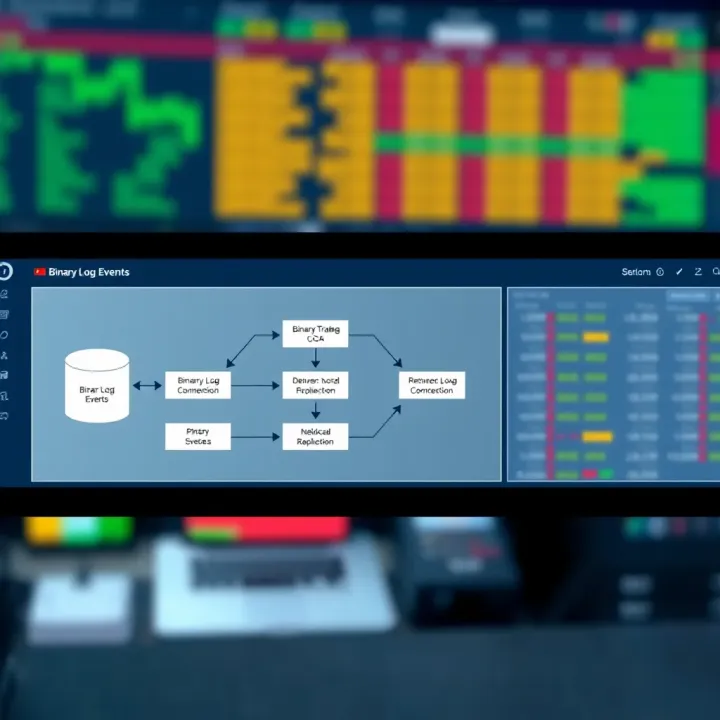
Explore how binary logs 📂 support data replication and recovery in databases. Learn management tips and avoid common pitfalls in Pakistan's context.
Explore how binary decoders work, their design approaches, and applications in digital circuits. Learn key factors for choosing the right decoder 📟💡.
Based on 9 reviews