
Understanding Bullish Chart Patterns in Stock Trading
📈 Learn how to spot bullish chart patterns like ascending triangles, cup and handle, and double bottoms to boost your stock trading strategy with volume and market insights.
Edited By
Liam Carter
Chart patterns play a key role in cryptocurrency trading by offering visual cues about possible price movements. These patterns develop from the collective behaviour of buyers and sellers, reflecting market sentiment and potential turning points. Understanding them helps traders to make more informed decisions rather than relying solely on guesswork.
In crypto markets, volatility is high, so recognising reliable chart patterns can give you an edge. Patterns like head and shoulders, triangles, and flags often indicate trend reversals or continuations. Spotting these early can alert you to prepare for either buying opportunities or exit points to limit losses.
Chart patterns are not foolproof but provide a practical framework to assess price behaviour and market psychology.
Here are some essential points to focus on:
Formation: Each pattern has a distinct shape formed over a specific timeframe. For example, a head and shoulders pattern has three peaks, with the middle peak higher than the others.
Volume: True pattern confirmation in crypto often involves volume changes; decreasing volume during formation and spikes on breakout or breakdown.
Timeframe: Patterns may appear on minute, hourly, or daily charts. For Pakistani traders using platforms like Binance or local exchanges, adjusting chart intervals helps verify pattern reliability.
Implications: Some patterns suggest continuation of the current trend, while others warn of reversals. For instance, an ascending triangle usually signals bullish continuation, whereas head and shoulders points to bearish reversal.
Limitations: Crypto markets can react unpredictably due to news or regulations. No pattern guarantees outcomes; use them alongside other indicators and risk management strategies.
By recognising and understanding these chart structures, crypto traders from Islamabad to Karachi can improve timing entry and exit points. This knowledge helps reduce emotional trading and sharpens analytical skills essential for navigating Pakistan's fast-growing cryptocurrency scene.
Chart patterns serve as a visual language traders use to interpret market behaviour. In cryptocurrency trading, these patterns help predict possible price moves based on historical data. Unlike random guesses, chart patterns offer a systematic way to read market sentiment and price direction, which is vital in a market as wild as crypto.
For example, spotting a "head and shoulders" pattern might warn a trader that a price reversal is near, allowing them to prepare accordingly. This ability to foresee potential shifts gives traders an edge, especially in volatile markets like Bitcoin or Ethereum. Understanding chart patterns equips investors with tools to identify entry and exit points more confidently, enhancing the chances of profitable trades.
Chart patterns are recurring formations on price charts that reflect changes in buying and selling pressure. Traders rely on these patterns to forecast future price movements. In technical analysis, patterns act as clues embedded in price data, indicating whether the market is likely to continue moving in the same direction or reverse course.
Unlike mathematical indicators that calculate values from price and volume (such as RSI or moving averages), chart patterns are more visual by nature. They show formations like triangles, flags, or double tops that emerge as price fluctuates over time. The role of these patterns is to simplify complex data into understandable shapes, making market trends easier to interpret.
While both tools aid decision-making, chart patterns and indicators differ in approach. Indicators use calculations based on price or volume and display as lines or histograms on charts, signalling overbought or oversold conditions, momentum, or trend strength.
Chart patterns, however, focus on the actual shape formed by price action itself. They include formations like ascending triangles or head and shoulders and demand traders recognise these shapes manually. Indicators can confirm patterns, but patterns offer a direct view of market psychology not always captured by numerical indicators.
Chart patterns reflect the collective psychology of market participants. When many traders react similarly at certain price levels, patterns emerge naturally. For instance, a double bottom signals strong support where buyers repeatedly enter, showing confidence in price holding at that level.
In cryptocurrency, these psychological factors are amplified due to a high number of retail traders and speculation. FOMO (fear of missing out) and fear itself often shape price movements visibly through patterns. Observing these allows traders to align with the crowd sentiment rather than going against it blindly.
The crypto market is renowned for its intense volatility and occasional market manipulation attempts. This makes pattern recognition both a challenge and necessity. Sudden price swings can create false breakouts, but experienced traders learn to identify reliable patterns amid chaos. For example, a triangle pattern on a daily Bitcoin chart suggests consolidation before a big move, but traders need to confirm breakouts with volume to avoid traps.
Remember: Alongside pattern recognition, always incorporate volume analysis and keep an eye on broader market news to make well-informed decisions in crypto trading.
Understanding these basics lays a strong foundation for applying chart patterns effectively in Pakistani and global cryptocurrency markets.
In cryptocurrency trading, recognising common chart patterns can give you a significant edge. These patterns reflect market psychology, showing shifts between buyers and sellers that often precede price moves. Being familiar with reversal and continuation patterns helps traders time entries and exits better, especially in the volatile crypto space where price swings can be sharp and sudden.
Head and Shoulders pattern is a classic reversal signal that indicates a trend is losing momentum. It consists of three peaks: a higher middle peak (the "head") flanked by two lower peaks (the "shoulders"). In crypto, spotting this pattern near an uptrend suggests sellers are starting to take control, and the price may drop. For example, Bitcoin's 2021 rally showed a clear head and shoulders before a correction, signalling cautious traders to consider taking profits or tightening stop losses.
Double Top and Double Bottom highlight strong support or resistance levels where price tries twice to break through but fails. A double top after an uptrend signals potential bearish reversal, while a double bottom after a downtrend indicates possible bullish reversal. These patterns are practical because they often precede significant price moves; for instance, Ethereum has formed a double bottom multiple times, helping traders spot buying opportunities after consolidation.
Triple Top and Triple Bottom are less common but even more reliable reversal patterns. These involve three failed attempts to break a price level. Spotting a triple top near crypto highs warns of weakening buying strength, foreshadowing a fall. Conversely, a triple bottom points to strong demand and a pending uptrend. While rarer, these patterns can add confidence to trading decisions when confirmed by volume or other indicators.
Triangles: Symmetrical, ascending, and descending triangles signal pauses in price movement before continuing the prior trend. For example:
A symmetrical triangle forms as price volatility contracts, leading to a breakout in either direction.
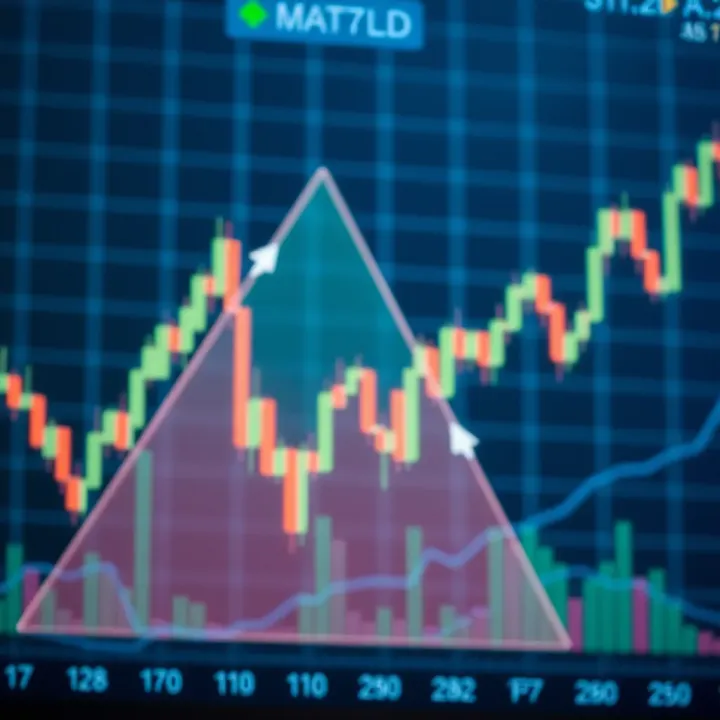
An ascending triangle usually signals bullish continuation, marked by a flat resistance line and rising support; this is common in coins gearing for another rally.
A descending triangle often indicates bearish continuation, with a flat support line and descending highs. Triangles offer traders clear targets and stop loss levels, making them handy for managing trades.
Flags and Pennants appear after a sharp price movement, representing brief consolidation before the trend resumes. Flags look like small rectangles slanting against the previous trend, while pennants form tight converging lines resembling small triangles. Both patterns reflect short pauses where sellers and buyers take a breather. For instance, after a steep rise, a flag pattern in Litecoin suggested a quick pullback before continuing the uptrend, providing traders opportunities to add positions.
Rectangles show sideways price movement, where support and resistance levels contain price within a range. Traders use rectangles to spot breakout or breakdown points. In crypto, rectangles can form during consolidation phases before significant moves. For example, Dogecoin's sideways range in early 2024 allowed traders to prepare for the next breakout by watching volume and price action closely.
Recognising these common chart patterns allows you to anticipate potential price movements and align trades accordingly. However, confirmation through volume and other tools is necessary to avoid false signals, especially given crypto's volatility.
By learning to identify these patterns and their implications, you can enhance your trading strategies and better navigate the unpredictable world of cryptocurrency markets.
Recognising and confirming chart patterns is essential in cryptocurrency trading to improve decision-making accuracy. Price action alone can be deceiving, especially in volatile markets like crypto, so combining it with volume and timeframe analysis helps filter reliable signals from noise.
Price action reveals market sentiment through movements of buy and sell orders, but volume confirms these moves' strength. When a pattern like a head and shoulders or triangle forms, an accompanying increase in volume during a breakout adds credibility to the signal. For example, if bitcoin's price breaks the neckline of a head and shoulders pattern with rising volume, it suggests that sellers are genuinely taking control.
Conversely, low volume breakouts tend to be unreliable. They may represent fake moves or manipulation, which are quite common in smaller altcoins where trading volume is easily swayed by whales. Monitoring volume provides practical insight into whether the price move is supported by broad market participation or just a few players pushing the price.
Spotting breakout and breakdown signals involves watching price action near key levels. Breakouts occur when price closes decisively beyond a resistance line, while breakdowns happen below support. Confirming these requires observing a sustained move beyond these levels, ideally on increased volume and with a clear candlestick close outside the pattern boundary. For instance, an ascending triangle pattern breaking above its upper trendline with strong volume tends to signal a continuation of the uptrend.
Traders often wait for confirmation candles, such as a full daily candle beyond the breakout point, to avoid premature entries. This careful approach limits losses from false breakouts, which can trap traders on the wrong side of the market.
Analyzing multiple timeframes helps validate chart patterns by providing stronger evidence of market direction. A pattern seen on a daily chart that aligns with formations on the weekly chart generally has more significance. This cross-verification reduces the chances of misreading the market.
For example, a bullish flag pattern on a 4-hour chart accompanied by an emerging triangle on the daily chart strengthens the case for an upward continuation. Conversely, if these patterns contradict each other, it warns traders to be cautious, as the shorter timeframe alone may be misleading.
Avoiding false signals through cross-checking means not relying on a single chart view. Traders should confirm patterns and breakout signals across higher and lower timeframes before committing funds. This method improves trade reliability by catching potential traps where a small timeframe breakout reverses quickly on the larger chart.
Using volume and multiple timeframe analysis together greatly improves the odds of identifying genuine chart patterns. This approach lets traders in Pakistan and beyond navigate crypto markets with clearer signals amidst high volatility.
By combining these steps, traders can improve their entries and exits while avoiding common pitfalls triggered by fake breakouts or misleading price action. This practice is especially useful in crypto, where sudden market moves can cause rapid losses if patterns are misread.
Trading cryptocurrency based on chart patterns requires more than just recognising shapes on a screen. Practical tips help traders pinpoint the best moments to enter and exit trades, control risks, and boost the reliability of pattern-based decisions. In volatile markets like crypto, where prices can swing wildly, understanding these tips makes a noticeable difference between profit and loss.
Chart patterns often suggest specific price targets that traders can use to plan their profits. For example, in a Head and Shoulders pattern, after the price breaks the neckline, traders estimate the drop by measuring the height from the head to the neckline and projecting it downward. This target helps in setting realistic profit goals and avoiding premature exits. Similarly, in a rising triangle, the expected price move after breakout is roughly equal to the base width of the triangle added to the breakout point.
These pattern targets serve as guides to lock in gains without second-guessing the market too much. For Pakistani traders especially, knowing when to take profit is crucial because crypto markets operate 24/7, and rapid price moves can erase gains if not monitored.
Placing stop losses correctly is vital to protect capital. Typically, stops are set just outside the pattern boundaries. For instance, in a double bottom pattern, a stop loss might sit slightly below the lower trough. This way, if the price dips below expected support, the loss is limited.
Another strategy is to use the breakout point as a stop level. If price moves back into the pattern after breaking out, it may signal a failed move, so closing the trade can prevent bigger losses. Proper stop loss placement keeps losses manageable, allowing traders to stay in the game longer.
False breakouts are a common trap in crypto trading due to market manipulation or sudden news events. A breakout that fails to follow through often pulls the price back into the previous range. Identifying these requires watching volume and price action closely. Low volume on a breakout increases the chance it is false.
For example, if BTC breaks above a resistance line but volume stays weak and price quickly falls back, jumping in can be risky. Pakistani traders can combine live market updates and volume analysis to reduce such mistakes.
Relying solely on chart patterns may lead to false signals. Combining patterns with technical indicators like Relative Strength Index (RSI), Moving Average Convergence Divergence (MACD), or volume oscillators improves confirmation. For instance, a bullish breakout accompanied by an RSI moving from oversold territory adds confidence.
This fusion helps filter trades with stronger signals and avoids chasing weak moves. It’s like having a second opinion confirming the trading setup, offering Pakistani traders a more robust strategy to deal with crypto’s choppiness.
Trading with chart patterns works best when combined with clear entries, exits, and disciplined risk management. Patterns point the way, but these practical steps keep traders in control amid crypto’s unpredictable swings.
Chart patterns have their fair share of limitations in cryptocurrency trading, mainly due to the market's unique nature. Recognising these challenges helps traders avoid overconfidence and adapt strategies that account for unpredictability.
Cryptocurrency markets are famously volatile, often swinging sharply within short periods. This volatility can distort traditional chart patterns, making them less reliable than in more stable markets like equities or forex. For instance, a classic Head and Shoulders pattern may break prematurely or fail, leading to false signals. The intense price swings can cause a pattern to appear complete only to reverse unexpectedly, which complicates entry and exit timing.
Market manipulation is another issue. Large holders or ‘whales’ can execute orders that push prices temporarily to trigger stop losses or fake breakouts. For example, a pump-and-dump scheme might create what looks like a bullish breakout from a triangle pattern but quickly reverses, leaving traders stuck. These misleading moves mean traders should combine chart patterns with volume analysis and other indicators to confirm signals before making decisions.
Backtesting involves reviewing past price data to see how a pattern performed historically. For crypto traders, this is crucial because it highlights whether a pattern tends to work with a specific coin or timeframe. By seeing which patterns have consistently predicted price movements in Bitcoin or Ethereum, for example, traders can improve confidence and reduce costly errors. Without backtesting, it’s easy to fall into the trap of relying on patterns that look good but have poor predictive value.
Crypto markets evolve rapidly with new tokens, regulations, and technology changes. A pattern that worked last year may underperform today because of shifting liquidity or trader behaviour. Pakistani traders might notice that volatile events, like sudden announcements from global regulators or local policy changes affecting exchanges, can alter market dynamics drastically. Staying updated and adjusting strategy accordingly keeps trading effective and reduces surprises.
Successful crypto traders don’t rely solely on chart patterns—they constantly learn, test their strategies, and adapt to the ever-changing market.
In short, chart patterns offer valuable insights but require careful handling in crypto trading. By understanding their limits and combining them with other tools and ongoing practice, traders can navigate the challenges better and improve their chances of success.
📈 Learn how to spot bullish chart patterns like ascending triangles, cup and handle, and double bottoms to boost your stock trading strategy with volume and market insights.

🔍 Learn how to spot key bearish chart patterns in technical analysis to predict market drops. Boost your trading skills and trade wisely in falling markets📉

📊 Learn to spot seven essential chart patterns in trading, understand their features, and apply practical tips for better decisions with smart risk management.

🚀 Find the best cryptocurrency trading platform in Pakistan 🇵🇰 with our guide on fees, security, coin options, and local regulations for safe trading.
Based on 9 reviews