

Understanding Binary Images: Basics and Uses
Discover how binary images work, their creation, common uses, and techniques. Learn about challenges and real-world applications in tech and healthcare 🖤⚫️📊.
Edited By
Sophia Collins
Managing risks in software engineering is vital to delivering projects on time and within budget. Unlike general business risks, software risks often involve technical failures, changing requirements, and unexpected integration problems. Handling these risks effectively means understanding their nature early and responding with appropriate strategies.
Identifying risks accurately at the start can save lakhs of rupees and weeks of delay in software projects.
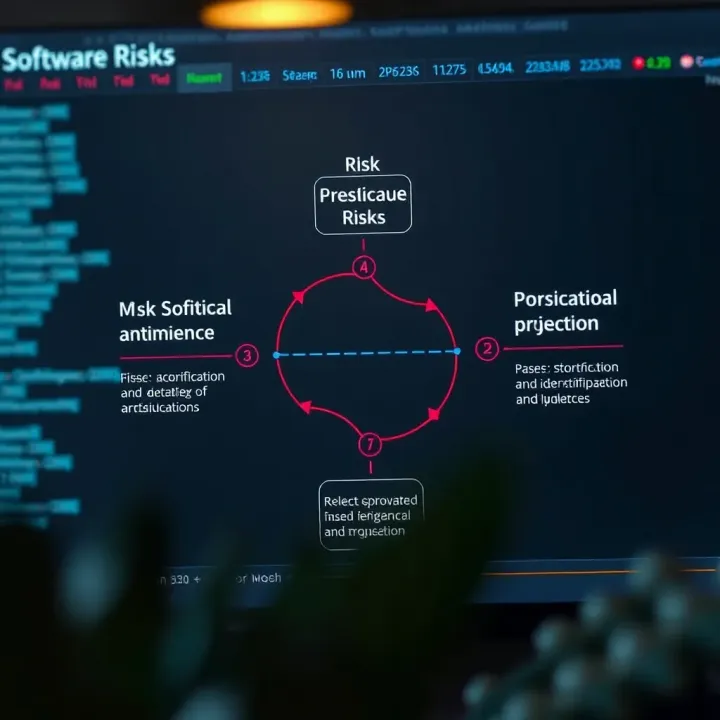
Common risks include poor requirement definition, technology mismatches, resource shortages, and security vulnerabilities. For example, choosing an unfamiliar programming language can cause delays if the team lacks expertise. Likewise, ignoring security concerns in early design phases can lead to expensive fixes later.
To keep projects safe from such pitfalls, teams use systematic risk management processes. This involves:
Identification: Listing all possible risks based on project scope and past experience.
Analysis: Assessing the impact and likelihood of each risk to prioritise the most critical ones.
Mitigation: Planning actions to reduce or eliminate high-priority risks.
Monitoring: Continuously tracking risks and adjusting plans as the project evolves.
A practical example is a fintech startup in Karachi that implemented risk monitoring tools to track third-party API stability. Early detection of API downtime helped them shift to backups quickly, avoiding disruption for their customers.
Software teams also rely on tools like JIRA, Microsoft Azure DevOps, and Risk Register templates to document risks and mitigation steps. Regular communication between developers, testers, and project managers ensures risks do not stay hidden.
In summary, managing software engineering risks requires ongoing attention and collaboration. Pragmatic approaches tailored to each project's needs ensure better control over uncertainties and smoother delivery.
Risk management is fundamental in software engineering because it helps teams spot potential problems early, before they turn into full-blown crises. Software projects often involve tight deadlines, complex code, and shifting requirements. Without actively managing risks, projects can easily spiral out of control, causing delays, budget increases, or faulty products that fail users.
Good risk management focuses on identifying risks, assessing their impact, and applying strategies to reduce or handle them. For example, a fintech startup developing a mobile payment app in Karachi might face risks like regulatory changes or security breaches. Knowing these risks upfront allows the team to plan accordingly, choose compliant technologies, and allocate resources to robust testing.
Common risk scenarios in software development include unclear requirements, technology changes, and key staff leaving mid-project. These risks aren’t just hypothetical; they occur regularly. For instance, if requirements aren’t well-defined, developers may waste weeks coding features customers do not need. Technology shifts, like a suddenly deprecated programming language, can force teams to rewrite large parts of the software.
When these risks go unmanaged, the consequences hurt more than just the project timeline. Uncontrolled risks can lead to poor software quality, dissatisfied clients, and ultimately loss of business reputation. Take a local e-commerce platform losing customer trust because their checkout kept crashing during peak sale days — that directly reflects ignored risk planning, such as load testing.
Reducing uncertainties in project delivery remains the primary goal. Active risk management means fewer unpleasant surprises, which gives teams better control over timing and outcomes. Instead of scrambling to fix a security flaw discovered late, a team practising risk management will plan routine security audits.
This approach improves decision-making and resource allocation. Knowing which risks have the most impact helps leaders focus efforts where they count. For example, if market research reveals a likely change in data protection laws, a software company can prioritise compliance development over minor feature enhancements. Such clarity prevents wasted budget and ensures critical issues receive timely attention.
Managing risks effectively turns guesswork into clear choices, making projects more predictable and increasing the chances of success.
By understanding risks deeply and making informed decisions, software teams can avoid costly pitfalls, finish projects on schedule, and deliver reliable products that meet real needs.
Understanding the different categories of risks in software engineering helps project teams identify potential pitfalls early and tailor risk management strategies accordingly. Risks usually fall into three main groups: technical, project management, and organisational or external risks. Each category has its unique challenges that can impact project timelines, costs, and overall success if left unchecked.
Software design flaws often stem from poor initial planning or misinterpretation of requirements. For example, a critical function might be designed without considering performance under heavy loads, leading to bottlenecks once the software is live. Such flaws cause rework and delay, eating into precious development time and increasing costs. Identifying design flaws early through peer reviews and prototyping reduces the chance of major issues surfacing later.
Technology changes and obsolescence can disrupt projects when a chosen technology becomes outdated or unsupported during development. For instance, relying on a framework that loses community support could force teams to switch tools mid-project, resulting in lost productivity. Staying informed on technology trends and selecting widely adopted, stable platforms helps lessen this risk. In Pakistan’s fast-growing tech scene, especially startups, flexibility to adapt technologies is vital to avoid falling behind.
Scheduling delays happen when project timelines slip, often due to underestimated workloads or sudden resource shortages. A developer falling ill during a crucial phase can hold back the entire schedule. Delays increase pressure on teams, sometimes forcing rushed work that compromises quality. Solid planning with buffer times and regular progress checks helps keep schedules realistic and adjust early if issues arise.
Budget overruns occur when actual costs exceed estimates, commonly from unforeseen complexities or scope changes. For example, adding extra features without adjusting the budget puts financial strain on the project. This risk affects investor confidence and the organisation’s bottom line. Budget transparency and strict change control processes are necessary to prevent spiralling costs.
Scope creep refers to uncontrolled changes or additions in project requirements. It may start with a client requesting minor feature tweaks but gradually expands to large new functions without proper evaluation. This drags out development and drives up cost, as the team chases moving targets. Clear initial requirements and formal agreement on changes mitigate scope creep effectively.
Team turnover can disrupt continuity, especially when experienced members leave mid-project. Finding skilled replacements is challenging in Pakistan’s competitive software industry, causing knowledge loss and delaying tasks. Encouraging employee retention and documenting knowledge carefully safeguards against this risk.

Stakeholder conflicts arise when different parties have diverging goals or expectations. A client might prioritise fast delivery, while developers insist on system stability, leading to friction. These conflicts delay decisions and impair cooperation unless handled with open communication and structured feedback loops.
Regulatory and compliance challenges involve meeting legal requirements such as data protection or industry-specific standards. Non-compliance can result in fines or project shutdowns. For software dealing with financial data in Pakistan, adhering to SECP rules or SBP guidelines is mandatory. Early identification of compliance needs and involving legal experts prevents last-minute issues.
Recognising the distinct categories of risks and their practical implications enables better planning and control, increasing the chances of a successful software project.
This categorisation ensures that risk management efforts focus precisely, making it easier to assign responsibilities and measure progress against potential threats.
Effective risk identification and analysis form the backbone of managing software projects successfully. Recognising risks early helps teams focus their efforts where it really matters, saving both time and resources. Without these techniques, hidden risks can snowball into project delays, budget overruns, or complete failure.
Brainstorming sessions bring together diverse team members to discuss potential risks openly. These sessions encourage free thinking where developers, testers, project managers, and clients can voice concerns about possible issues. For example, in a fintech app development, a brainstorming meeting might reveal security vulnerabilities nobody had thought of early on. The key is to create a safe environment where all risks, however small or unlikely, get considered.
Expert interviews are another valuable method, especially when working with unfamiliar technologies or complex domains. Interviewing experienced professionals can uncover risks that are not obvious from project documents alone. For instance, consulting a cybersecurity expert might highlight compliance risks with Pakistan's data protection regulations that a generalist could miss. These interviews often supplement brainstorming and provide deeper insights.
Checklists and historical data help teams avoid repeating past mistakes by referencing known risks from similar projects. For example, a software company can maintain a checklist noting common delays due to third-party API changes, which can then be monitored proactively. Drawing on previous project documentation makes risk identification more systematic and less prone to oversight.
Qualitative risk assessment techniques use subjective ratings like "high," "medium," or "low" to evaluate how severe a risk is and how likely it will occur. This approach is quick and useful when numeric data is lacking. For example, assessing the chance of a software module failing might rely on expert judgment rather than precise probabilities. Despite being less exact, qualitative methods guide immediate prioritisation effectively.
Quantitative risk analysis goes further by assigning numerical values to both probability and impact. This method involves calculations like expected monetary value (EMV), which can estimate potential financial losses from specific risks. It’s particularly helpful for projects with available statistical data, such as mobile app releases where user crash rates are tracked historically. Quantitative analysis allows better financial planning and risk budgeting.
Risk prioritisation matrices combine severity and probability into an easy-to-interpret grid that categorises risks from low to critical. This visual representation helps teams focus first on risks with both high impact and high likelihood. For instance, a matrix might show that a risk of data breach is critical, while a minor UI bug rates only as low priority. Using these matrices simplifies decision-making and action planning.
Identifying and analysing risks isn’t a one-off action. It demands continuous attention and adaptability as projects evolve or unforeseen issues arise.
Employing these practical techniques ensures teams spot risks early and assess them properly, leading to more controlled and successful software project outcomes.
Effective risk mitigation strategies help software teams reduce uncertainties and manage potential problems before they derail a project. These strategies focus on avoiding risks when possible, reducing their impact when avoidance isn’t feasible, transferring certain risks to third parties, or accepting risks that have minimal consequences. Developing clear contingency plans to handle unexpected issues also plays a vital role in keeping projects on track.
Choosing reliable technologies is one of the best ways to avoid risks in software projects. Opting for mature and well-supported programming languages, frameworks, or platforms can reduce unexpected flaws or compatibility challenges. For example, a startup might prefer using stable versions of Java or Python instead of newer, untested libraries to ensure smoother development and fewer bugs. Reliable technologies often come with strong community support, documentation, and proven integration tools, which streamline problem-solving during development.
Defining clear requirements at the start is equally crucial in reducing risks. Ambiguous or incomplete requirements often lead to scope creep and rework, pushing deadlines and increasing costs. A well-documented requirements baseline, agreed upon by stakeholders, ensures everyone understands the project scope and goals. For instance, a bank developing a mobile app can avoid costly redesigns by finalising transaction flows and security expectations up front, saving time and resources later.
Outsourcing certain components transfers risks to specialised vendors who have the expertise and capacity to manage particular parts of the system. For example, a company might outsource payment gateway integration to a well-known fintech provider, reducing risks related to security compliance and transaction failures. While outsourcing shifts risk management, it also requires thorough due diligence to select reliable partners and manage contractual obligations clearly.
Accepting low-impact risks is sometimes the simplest approach when the cost of mitigation outweighs the potential damage. An example would be tolerating minor interface bugs that do not affect core functionality or customer experience. By accepting such risks, teams can focus efforts on higher-priority issues and use resources efficiently without chasing every minor problem.
Backup plans for critical failures are essential to handle situations when primary solutions fail. For instance, if a database server crashes, having a standby database or cloud-based backup ensures business continuity. Contingency plans outline steps to recover services quickly, minimise downtime, and maintain user trust.
Resource reallocation allows teams to shift personnel or budget dynamically to areas facing unexpected challenges. If a testing phase uncovers severe issues, additional developers or testers can be assigned temporarily to accelerate fixes. This flexibility helps projects adapt to changing circumstances without stalling progress.
Developing practical risk mitigation strategies ensures software projects avoid costly surprises, maintain schedules, and deliver quality products. Planning ahead with clear controls, realistic expectations, and fallback options keeps development smooth and manageable.
Ongoing risk monitoring and documentation are vital for keeping software projects on track amid changing challenges. Risks evolve throughout the software lifecycle; continuous oversight helps detect new issues early and verify whether existing risk responses are effective. Without proper monitoring, unaddressed risks can escalate, causing delays or budget overshoots, which traders and investors definitely want to avoid.
Regular risk review meetings form the backbone of effective risk monitoring. These meetings bring together project managers, developers, and stakeholders to discuss current risks and any updates. For example, in a fintech project, a sudden change in regulatory guidelines might require immediate risk reassessment during such meetings. Holding these reviews weekly or biweekly ensures the whole team stays alert to risk changes, preventing surprises that could impact delivery.
Adjusting project plans based on monitoring results ensures flexibility. If a risk mitigation strategy fails or new risks emerge, the project blueprint must evolve accordingly. Imagine a software team initially planned to use a certain framework but realises during development that it lacks vital features. Reviewing risks regularly and adapting plans—like switching technologies or reallocating resources—can save time and money. This responsiveness supports investors' interests by keeping the project aligned with its goals despite disruptions.
Creating risk registers documents all identified risks, their likelihood, potential impact, and mitigation plans. This register is a living document, updated regularly to reflect the project's status. For instance, a risk register might contain entries about server outages or cyberattack threats relevant to an e-commerce project. Maintaining a clear risk register enables quick reference and better communication among team members and stakeholders.
Recording mitigation actions and outcomes tracks how risks were addressed and the results of those actions. This practice helps teams learn from past experiences and refine future risk strategies. Suppose a particular mitigation approach in a mobile app development, like additional code reviews, successfully prevented bugs. Recording this outcome not only validates the approach but also assists in building a knowledge base for future projects. For investors and analysts, such thorough documentation provides transparency and confidence in the risk management process.
Consistent risk monitoring combined with accurate documentation isn't just about avoiding failure; it's about steering projects smoothly toward success, enabling informed decisions at every stage.
In summary, ongoing risk monitoring and documentation form the safety net in software engineering. For traders, investors, and analysts, this means stronger assurance that projects will meet expectations despite uncertainties.
Using practical tools and established frameworks helps software teams handle risks more efficiently and consistently. These tools provide structured processes and clear documentation methods, making it easier to spot, assess, and respond to potential problems early. Without such frameworks, risk management can become chaotic, increasing chances of project delays or failures.
ISO standards offer globally recognised guidelines for risk management. ISO 31000, for example, helps teams set up risk policies and frameworks tailored to their specific context. In software engineering, applying ISO standards ensures that risks are tracked systematically, and responses are coordinated. This approach benefits teams working on complex projects where multiple stakeholders are involved, such as banks rolling out new digital services or telecom companies upgrading networks.
These standards also support better communication across departments by creating a common language around risk. For instance, when a Pakistani software house follows ISO principles, it can align its risk practices with partners or clients overseas, improving project coordination.
PMBOK risk processes from the Project Management Body of Knowledge focuses on integrating risk management into every phase of a project. It breaks down risk handling into five key processes: risk planning, identification, analysis, response planning, and monitoring. This practical structure suits software projects of any size.
Applying PMBOK processes helps project managers in Pakistan’s IT industry keep projects on track, especially when dealing with fast-changing requirements or technology shifts. For example, teams can regularly review risk registers during Agile sprints to adjust priorities and avoid surprises at delivery.
RiskRegister tools simplify managing identified risks by centralising them in one place. These tools allow teams to log risks, evaluate their severity, assign owners, and track mitigation progress. In Pakistan, startups developing fintech apps can use RiskRegister solutions to monitor regulatory risks or data security threats.
Such tools boost transparency and accountability as everyone involved can see real-time updates. This reduces the risk of important issues slipping through cracks, which is particularly helpful in remote or distributed teams.
Project management software features also provide built-in risk tracking alongside tasks and deadlines. Applications like Jira, Asana, or Microsoft Project come with dashboards and alerts that notify team members about pending risk actions or new threats.
Using these features allows teams to embed risk management into daily workflows instead of treating it as a separate activity. For example, a software company in Lahore can integrate risk status updates into sprint meetings through these tools, ensuring risk remains a visible part of project discussions.
Effective risk management tools and frameworks not only streamline processes but also cultivate a proactive mindset essential for delivering successful software projects in Pakistan’s dynamic tech environment.
Effective risk management in software engineering is impossible without clear communication and active team involvement. When a project team works together transparently and openly discusses potential risks, the chances of spotting issues early and addressing them effectively increase significantly. This approach makes it much easier to allocate resources wisely and avoid costly surprises down the line.
Cross-functional team inputs bring diverse perspectives to identifying and analysing risks. For example, developers might spot technical challenges that project managers may overlook, while business analysts can highlight risks related to changing client requirements. Involving members from different departments—like QA, security, and operations—helps uncover risks hidden in specific areas. In practice, this means regular meetings or workshops where the whole team contributes insights, making the risk assessment more comprehensive and balanced.
Stakeholder engagement is equally important. Stakeholders often include clients, end-users, and senior management, each with unique concerns and priorities. Actively involving them during risk assessments helps ensure their expectations align with project realities. For instance, a client may need to know upfront about potential delays caused by regulatory checks. Keeping stakeholders in the loop encourages their buy-in for mitigation plans and makes it easier to manage changes without friction.
Training and awareness programs are essential to embed risk consciousness in daily workflows. When team members understand different risk types and their implications, they tend to raise concerns early rather than wait for problems to escalate. Practical workshops, e-learning modules, or even short lunch-and-learn sessions can equip staff with tools to identify and report risks. For example, a training session on cybersecurity risks might help developers anticipate vulnerabilities and apply fixes proactively.
Transparent communication of risk status keeps everyone informed about current risk levels and the progress of mitigation efforts. This transparency avoids rumours and assumptions, which often worsen the situation. Sharing risk updates through dashboards or weekly bulletins ensures that decision-makers have real-time data to adjust project plans when necessary. A clear example is when a project manager reports a newly discovered scheduling risk openly, allowing the team to re-prioritise tasks before deadlines are compromised.
Open communication and shared responsibility in risk management build trust within the team and with stakeholders, leading to smoother project delivery and less costly mistakes.
By actively fostering collaboration and transparency, software engineering teams can turn risk management from a tick-box exercise into a dynamic, ongoing process that everyone owns.
Discover how binary images work, their creation, common uses, and techniques. Learn about challenges and real-world applications in tech and healthcare 🖤⚫️📊.

Explore binary relations in math 🔢: definitions, properties, types, and real-world examples that link elements from two sets clearly and effectively.

Explore binary relations with practical examples 📘. Understand definitions, types, and applications in set theory and real-world contexts clearly and simply.

Explore binary options trading in Pakistan 🇵🇰 with insights on platforms, regulations, risks, and tips to trade smart and stay compliant in this market 📊
Based on 7 reviews