
Best Trading Apps in Pakistan: A Practical Guide
📱 Discover the best trading apps in Pakistan! Compare top platforms, learn key features, understand local regulations, and get tips for trading success.
Edited By
Daniel Hughes
Forex trading, or currency trading, involves buying and selling foreign currencies with the aim to make a profit. In Pakistan, many traders are taking an interest in forex because of its potential for significant returns and 24-hour market access.
The forex market operates globally and is the largest financial market by volume, trading over $6 trillion daily. Unlike the Pakistan Stock Exchange (PSX), forex markets never close during the week, giving traders flexibility to engage around their schedule.
That said, trading forex in Pakistan comes with its own set of challenges. The legal framework is strict—the State Bank of Pakistan (SBP) allows forex trading only through authorised dealers and regulated brokers. Pakistani traders must avoid illegal platforms and offshore brokers to stay within the law and protect their capital.
Understanding the basics is crucial before starting. Forex trading hinges on currency pairs like USD/PKR or EUR/USD—prices reflect how much one unit of a currency costs in terms of another. For instance, if USD/PKR is 280, it means one US dollar equals 280 Pakistani Rupees.
Risk management and strategy matter a lot. Success in forex isn’t just about predicting price moves but controlling losses through stop-loss orders and setting realistic profit targets. Many beginners overlook this and lose money quickly.
Here are some key points for newcomers:
Use demo accounts offered by platforms like MetaTrader 4 or MetaTrader 5 to practice without risking real money.
Follow currency trends influenced by economic indicators such as SBP policy rates, trade balances, or political events.
Keep updated with announcements from the Federal Board of Revenue (FBR) about tax on forex income.
Avoid schemes promising guaranteed profits—they usually end badly.
Practising patience and discipline saves many traders from costly mistakes in volatile forex markets.
This guide will help you navigate forex trading in Pakistan with confidence, explaining legal aspects, popular platforms, common terms, and practical tips to manage risks effectively.
Grasping how forex trading operates is crucial for anyone looking to navigate this market confidently. Understanding the basics not only helps avoid costly mistakes but also equips you to spot opportunities and manage risks effectively. For Pakistani traders, this knowledge connects global currency shifts with local economic factors like rupee fluctuations, imports, and exports.
Forex trading involves buying and selling currencies to profit from their price changes. Unlike stock markets, forex runs 24 hours on weekdays, offering constant chances for traders. For example, a trader in Karachi might buy Euros when its value dips against the US dollar, expecting it to rise later.
Currencies are traded in pairs, such as USD/PKR or EUR/USD. The first currency is called the base, and the second the quote. The price shows how much of the quote currency is needed to buy one unit of the base. For instance, if USD/PKR is 280, it means one US dollar costs 280 Pakistani rupees. Understanding pairs helps traders predict movements and choose appropriate trades.
Currency prices fluctuate due to economic data, political events, and market sentiment. For example, if Pakistan’s central bank lowers interest rates, the rupee might weaken, affecting USD/PKR rates. News about trade deals or inflation also shifts prices. Being aware of these drivers helps traders anticipate market moves rather than react blindly.
The classic way to make money in forex is to buy a currency at a low price and sell it higher. Suppose a trader buying USD/PKR at 275 sells it at 280—they gain the difference in rupees. Traders monitor charts and news to time their trades, aiming to catch such profitable moves.
Forex brokers often allow leverage, meaning you can control a larger position than your actual deposit (margin). For example, with 1:100 leverage, Rs 10,000 lets you trade Rs 1,000,000 worth of currency. This magnifies profits but also increases risks. Pakistani traders should carefully manage leverage to avoid heavy losses.
Traders don't always own currencies physically; many speculate on price changes using contracts like CFDs (Contracts for Difference). They can profit if they predict whether a currency will rise or fall. For instance, if a trader believes the rupee will weaken against the dollar due to rising inflation, they might short USD/PKR.
Successful forex trading relies on solid understanding, disciplined strategy, and keeping an eye on local and global factors affecting currency prices.
This section lays the groundwork so you can approach the forex market thoughtfully and with realistic expectations.
Understanding the legal framework governing forex trading in Pakistan helps traders avoid legal issues and ensures they use reputable channels. The government, through various institutions, regulates forex activities to protect investors and maintain financial stability.
The State Bank of Pakistan (SBP) is the main regulator when it comes to forex in Pakistan. SBP oversees the proper functioning of currency exchange operations and enforces rules related to forex transactions within the country. For example, only authorised dealers licensed by SBP can legally offer forex services to the public. This prevents illegal currency trading and protects Pakistan’s financial system from unregulated risks.
SBP also restricts the use of foreign exchange for certain purposes, limiting capital flight and fake transactions. When trading forex with dollars, euros, or any other foreign currency in Pakistan, one must comply with SBP policies. Failure to follow SBP rules can lead to penalties or legal action.
The PTA regulates internet and telecommunications access in Pakistan and plays a surprising but important role in forex trading. Since many forex platforms operate over the internet, PTA approves and monitors online forex trading providers. It blocks access to unlicensed or fraudulent foreign forex brokers to protect citizens from scams.
For Pakistani traders, using PTA-approved platforms means safer and legal access to global forex markets. This helps control cyber risks and ensures communication systems are not used for illegal financial activities.
Pakistan has strict rules regarding foreign forex brokers. Only brokers who meet SBP and PTA requirements can legally offer trading services to Pakistani residents. Many international brokers advertise services online but do not get official approval, making it risky to deal with them.
Pakistani traders should confirm that their broker is licensed and registered with Pakistani authorities. Dealing with unlicensed brokers can lead to loss of funds and no legal recourse if problems arise.
Always choose forex platforms approved by PTA for practicing or live trading. These platforms comply with local laws and technical standards and provide easier access without interruption. For instance, popular platforms offering Urdu support and compatible with Pakistani payment methods are safer than unknown overseas sites that might get blocked.
Forex profits are taxable in Pakistan, so traders must declare earnings on their income tax returns filed with the Federal Board of Revenue (FBR). Keeping clear records of trades and profits helps during audits. Ignoring tax compliance may cause fines or legal issues.
The forex market in Pakistan has attracted scams exploiting inexperienced traders. Always verify broker licences via SBP or the Securities and Exchange Commission of Pakistan (SECP). Avoid offers promising guaranteed returns or requiring large upfront payments.
Staying within Pakistan’s legal framework protects your investments and builds a safer forex trading experience. Always verify authorities, follow regulations, and use trusted platforms to trade confidently.
Understanding key trading terms and strategies is vital for anyone entering forex trading in Pakistan. These concepts help you make informed decisions and manage risks better. Below, we break down essential terminology and popular strategies, all explained in simple terms one might find in Urdu trading discussions.
Pip, lot, spread, and leverage are fundamental terms every trader should grasp. A pip is the smallest price move a currency pair can make, usually the fourth decimal place. For example, if USD/PKR moves from 280.0000 to 280.0100, that’s a move of 1,000 pips which sounds big but in reality, the pip value depends on lot size. A lot is the standard unit of trading – usually 100,000 units of a currency. Smaller accounts may deal in mini lots (10,000 units) or micro lots (1,000 units).
Spread is the difference between buying (ask) and selling (bid) price and represents the broker’s commission. For instance, a spread of 2 pips means you start your trade 2 pips behind the current price. Leverage lets you control a bigger position with a smaller capital, say 1:100 means with Rs 10,000 you can trade Rs 1 million worth of currency. This increases profit potential but also risk, so knowing how to use it cautiously is important.
Buy/Sell orders and stop-loss are your basic tools to enter and exit the market. A buy order means you expect the currency price to rise, while a sell order means you expect it to fall. Stop-loss is an order you set to limit losses by automatically closing a trade when the price reaches a certain point, protecting your capital from unexpected market moves. For example, if you buy USD/PKR at 280 and set stop-loss at 275, your trade closes if price falls to 275, cutting your losses.
Fundamental vs technical analysis offers two ways to predict price moves. Fundamental analysis looks at economic indicators like inflation rates, interest rates (SBP policy rate), and political events in Pakistan or global markets to guess currency direction. Technical analysis, on the other hand, relies on charts and patterns, like moving averages or support/resistance levels, focusing solely on price behaviour. Both methods have their merits and many traders combine them for better accuracy.
Day trading vs swing trading differ mainly by timeframe. Day traders open and close positions within the same day, aiming to profit from small price movements while avoiding overnight risk—a useful approach during volatile sessions after SBP announcements. Swing traders hold trades for several days or weeks, capturing bigger price swings, which fits well if you can’t monitor markets all day.
Trend following basics means identifying and riding the price direction until signs of reversal. If PKR is weakening against the USD consistently over days, a trader following the trend would keep selling PKR to profit. Tools like moving averages help confirm trends. This strategy suits hands-off traders who prefer clear, sustained market moves over frequent trades.
Risk management techniques are vital to protect your account. Experienced traders advise never risking more than 1-2% of capital on a single trade. Set stop-loss orders, avoid over-leveraging, and diversify trades. For example, don’t invest all in one currency pair; spread risk over USD/PKR, EUR/USD, and GBP/USD. This way, losses in one position won’t wipe out your entire account.
Mastering these key concepts and strategies helps you trade forex with greater confidence and reduces the chance of costly mistakes. Start small, keep learning, and manage risks smartly.
Selecting the right forex trading platform is a key step for Pakistani traders. The platform acts as the gateway to the forex market and affects your trading experience, security, and profit potential. A suitable platform should align with local regulations, offer user-friendly features in Urdu, and support trading in Pakistani rupees alongside major currency pairs.
Regulation ensures a broker or platform operates transparently and protects your funds. In Pakistan, it is important to use platforms recognised by the State Bank of Pakistan (SBP) or complying with Pakistan Telecommunication Authority (PTA) guidelines. Unregulated platforms risk sudden closures or fraudulent activities, which have caused losses for some Pakistani traders.
Security includes data encryption, two-factor authentication, and segregation of client funds. For example, platforms like MetaTrader 4 or 5, when offered by licensed brokers, implement these security measures. Always check if your chosen platform provides such protections before trading live.
An interface in Urdu improves accessibility, especially for new traders unfamiliar with English financial terms. It makes it easier to understand order types, charts, and reports without confusion. Some platforms now offer Urdu language packs or complete UI translation to cater to Pakistani users.
This feature reduces mistakes during trading and speeds up learning, allowing traders to focus on market analysis rather than language barriers. For instance, platforms like FXPesa have started adding Urdu support to serve Pakistan’s growing retail trader base.
A suitable platform should allow accounts in Pakistani rupees (PKR) or enable simple PKR deposits and withdrawals. This avoids currency conversion fees and hassles common when dealing only in USD or EUR accounts.
Also, availability of major pairs like USD/PKR, EUR/USD, GBP/USD, and others is critical. Some international brokers may not offer PKR trading pairs, requiring workarounds or higher costs. Choose brokers that list PKR pairs and provide competitive spreads to optimise trading costs.
Local brokers often understand the Pakistani market better, including regulatory nuances and payment systems. They usually provide easier client verification processes and support in Urdu. However, international brokers may offer more currency pairs, advanced tools, and tighter spreads.
For example, a local broker might be better if you plan to fund your account through JazzCash or Easypaisa, while an international broker may suit those with global exposure in mind. It is wise to compare both types for the best fit.
Several brokers now provide Urdu customer service and platform translations. Using a platform with Urdu support helps in reading educational resources, understanding live chats, and resolving issues quickly.
Platforms without Urdu options might require more effort learning terms, which could lead to costly mistakes. Pakistani traders should prioritise this to be more confident in their trading decisions.
Payment ease directly impacts how smoothly you can enter or exit the forex market. Look for brokers accepting payments via JazzCash, Easypaisa, bank transfers (through local banks such as HBL, UBL), and even credit/debit cards common in Pakistan.
Avoid platforms that only accept international wire transfers or obscure cryptocurrencies not widely used in Pakistan. Quick, local payment options reduce delays and currency conversion costs, making your trading more efficient.
Choosing the right forex trading platform is not just technical; it is a practical decision that affects your safety, ease, and profitability in Pakistan’s unique trading environment.
Forex trading can be quite rewarding but also risky, especially without proper guidance. For Pakistani traders, managing risks effectively is key to protecting capital and growing steadily. This section focuses on practical advice and risk management techniques relevant to the local context, helping you avoid pitfalls common in forex trading.
Using a demo account is the safest way to start forex trading. It lets you explore market behaviour and test strategies without risking real money. For example, many Pakistani beginners use demo accounts provided by popular platforms like MetaTrader or local brokers offering Urdu interfaces. This practice helps to understand how currency pairs react to economic news from both Pakistan and major markets like the US or UK.
A demo account builds the trader's confidence by allowing repeated practice under real-time conditions. You develop the ability to spot trends, place orders, and use features like stop-loss without pressure. The experience gained reduces emotional trading mistakes, which are common when starting live trading with real funds. For instance, getting comfortable with reading charts and timing entries takes time but is essential before risking your hard-earned rupees.
Traders should set achievable targets aligned with their available capital and experience. Expecting to double your account in a week is unrealistic and dangerous. Instead, aim for steady, small gains, say 1-2% per week. This approach helps you learn patiently and compund profits over time. Consider Muhammad, a trader from Lahore, who started with Rs 50,000 and focused on consistent monthly growth rather than chasing quick wins.
Stop-loss orders limit your losses by automatically closing a trade when the price hits a set level. Without stop-loss, a sudden currency drop could wipe out a large position. Pakistani traders often overlook this, leading to heavy losses from market volatility. For example, if you buy USD/PKR at 280 and set a stop-loss at 275, your losses are capped even if the price suddenly falls. Always use stop-loss as part of your trading discipline.
Leverage allows trading larger positions with smaller capital, but it increases risk. Many new traders fall into the trap of over-leveraging, leading to big losses. A leverage of 1:100 means a Rs 10,000 deposit controls Rs 1,000,000 worth of currency. If the trade moves against you by just 1%, your entire capital could be lost. Pakistani brokers usually offer leverage, but using low leverage (like 1:10 or 1:20) is safer, especially for beginners. Over time, as skills improve, leverage can be adjusted cautiously.
Remember: Forex trading is not a sprint but a marathon. Risk management and practical learning like demo trading shape your success more than chasing quick profits.
By following these practical tips and managing risks wisely, Pakistani traders can navigate forex markets with more confidence and reduce chances of heavy losses.
📱 Discover the best trading apps in Pakistan! Compare top platforms, learn key features, understand local regulations, and get tips for trading success.
Explore top trading apps 🌐 designed for reliability and user-friendliness! Get key tips to pick the best platform for investors in Pakistan 🇵🇰.
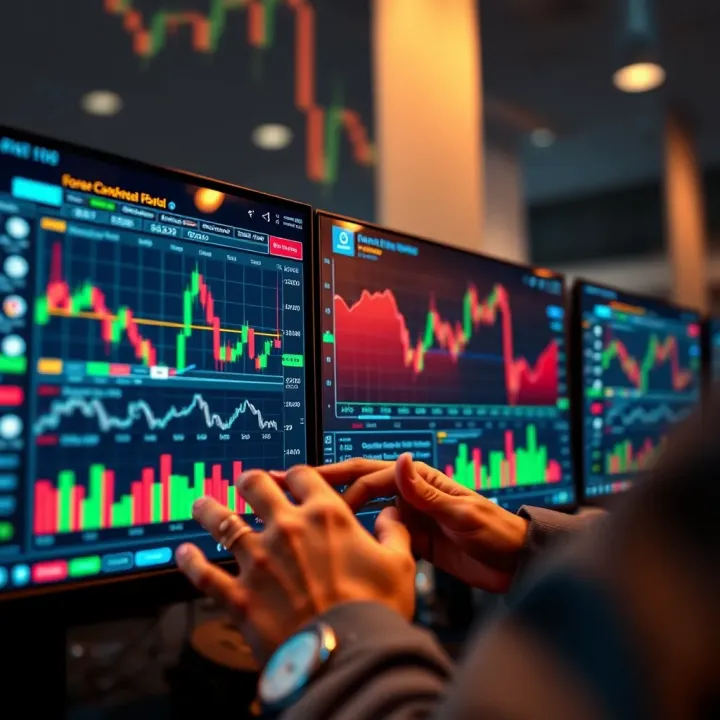
Find the best forex trading platform for Pakistani traders 🇵🇰. Explore key features, security, costs, and support to match your trading style with ease 💹.
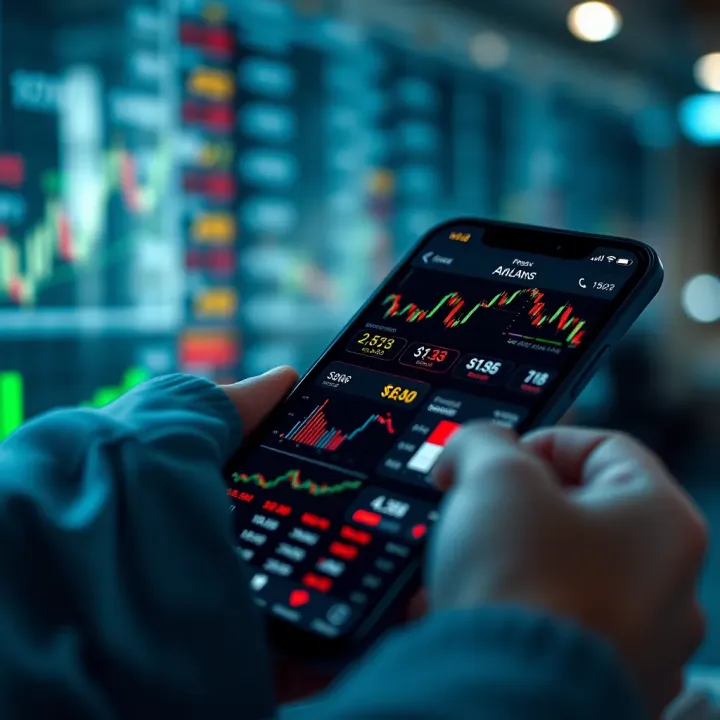
📱 Find the best forex trading app in Pakistan with our guide! Learn about top apps, key features, regulations, and safe trading tips to boost your skills. 🇵🇰
Based on 9 reviews